


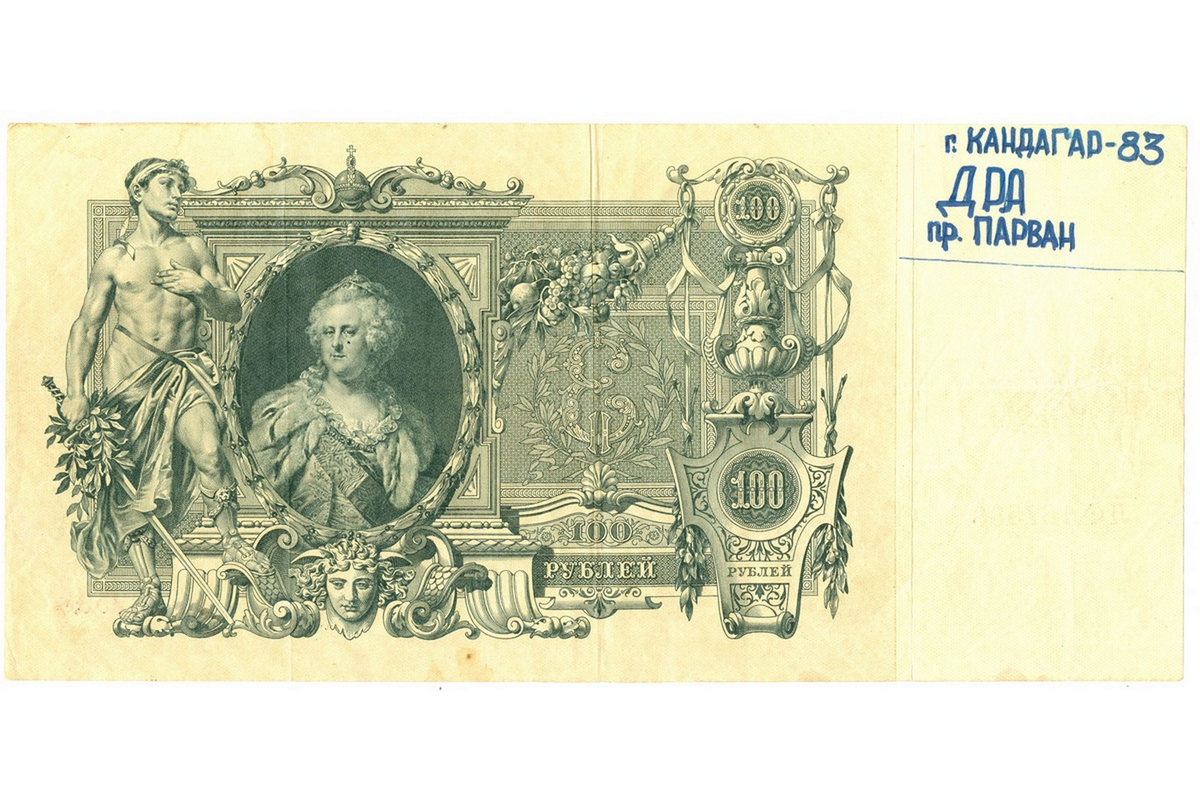
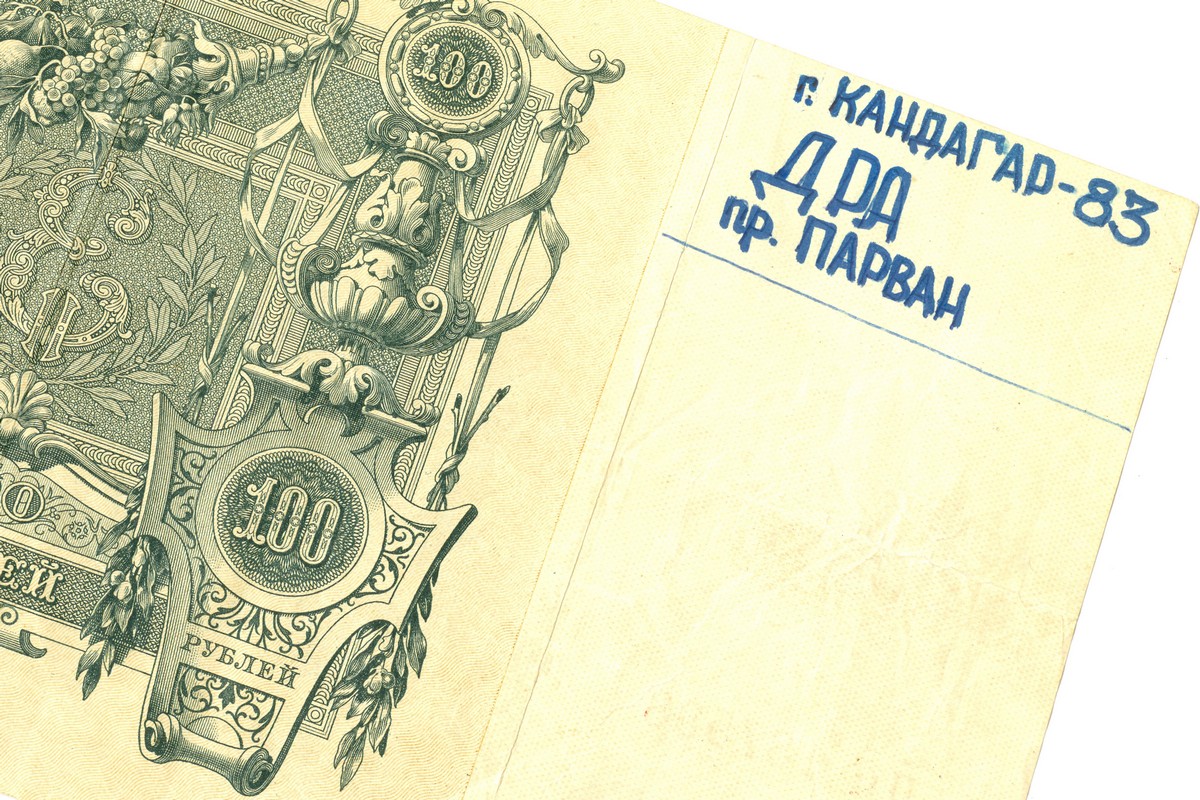
The 1910 banknote was issued by the State Bank of the Russian Empire as part of the monetary reforms of the early 20th century. These banknotes became a cornerstone of the stabilized monetary system introduced by Sergiy Witte, during which the ruble was backed by gold and trusted both domestically and abroad. While the banknote officially retained its legal tender status until 1917, it remained in use much longer. Following the February and October Revolutions, these credit notes were utilized by various regimes. Due to their high-quality engraving, complex ornamentation, and multi-level security features, they remained in circulation until the early 1920s, often bearing additional stamps or inscriptions that verified their validity. The inscription “g. Kandahar-83 / DRA / pr. Parvan” likely indicates the banknote’s use as a monetary surrogate or accounting tool during the Soviet military presence in Afghanistan.
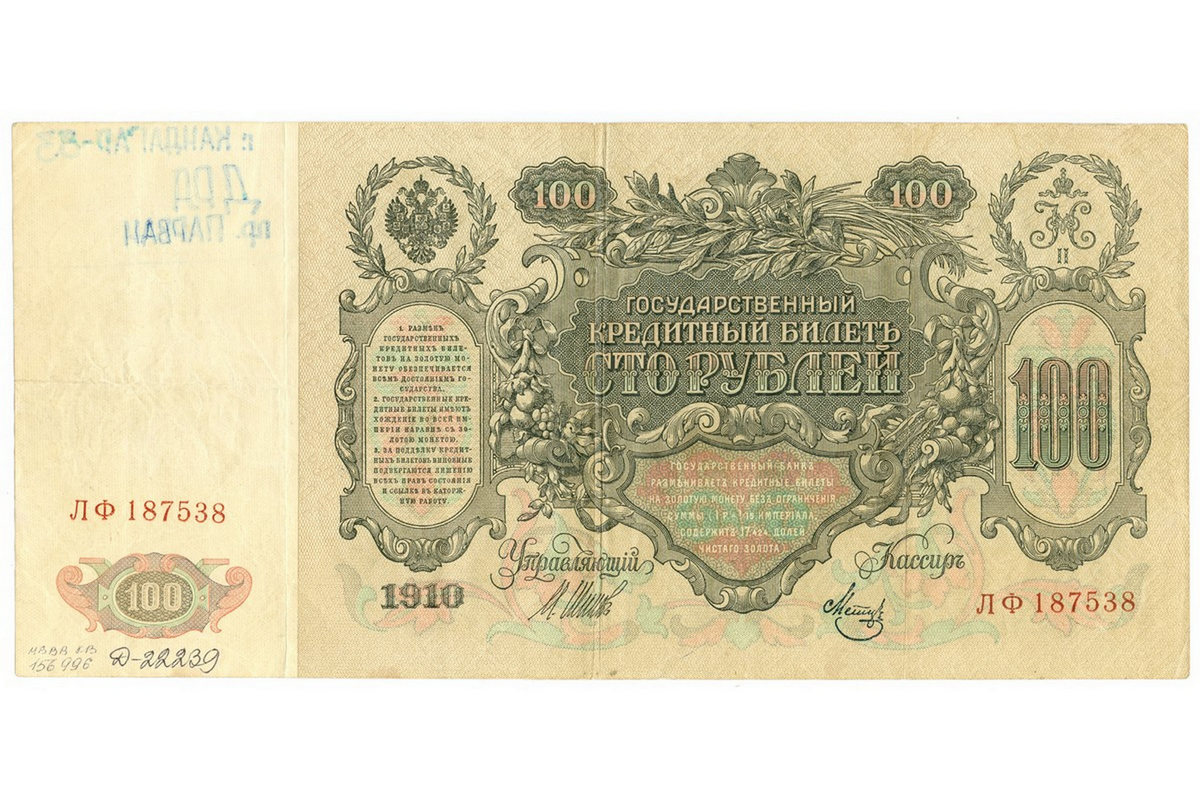
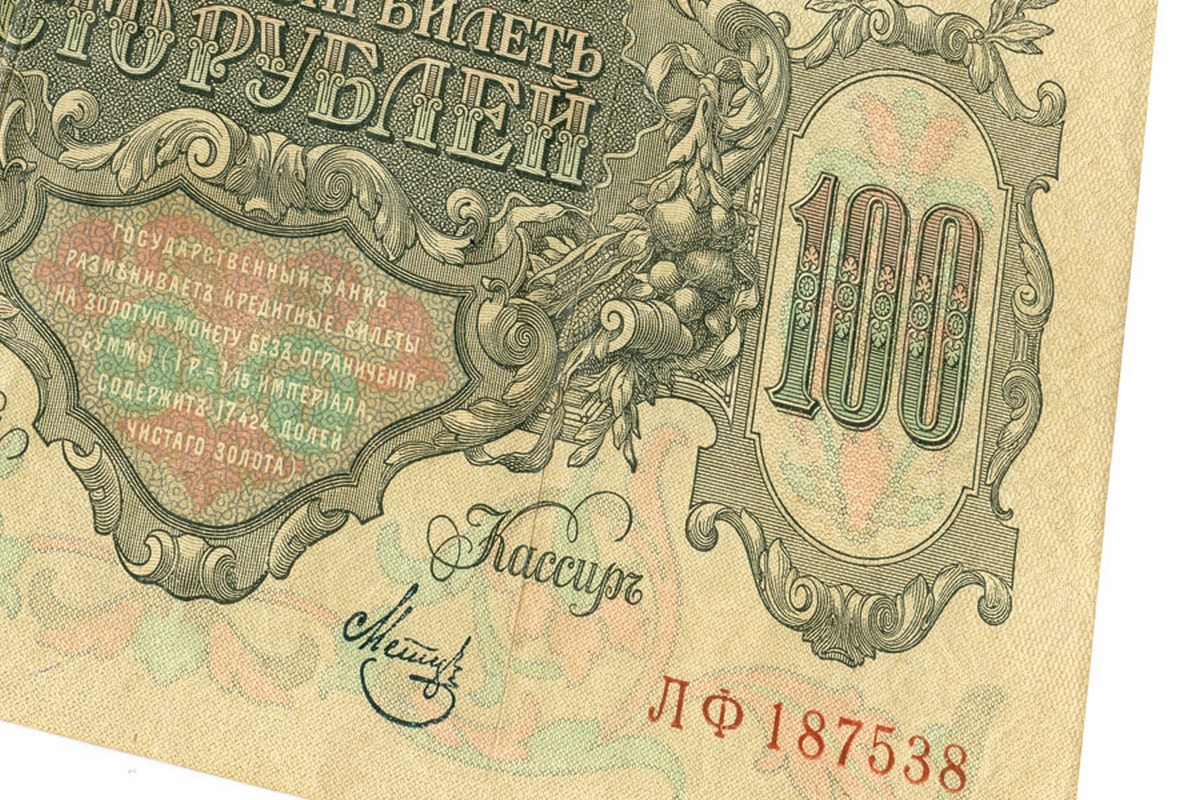
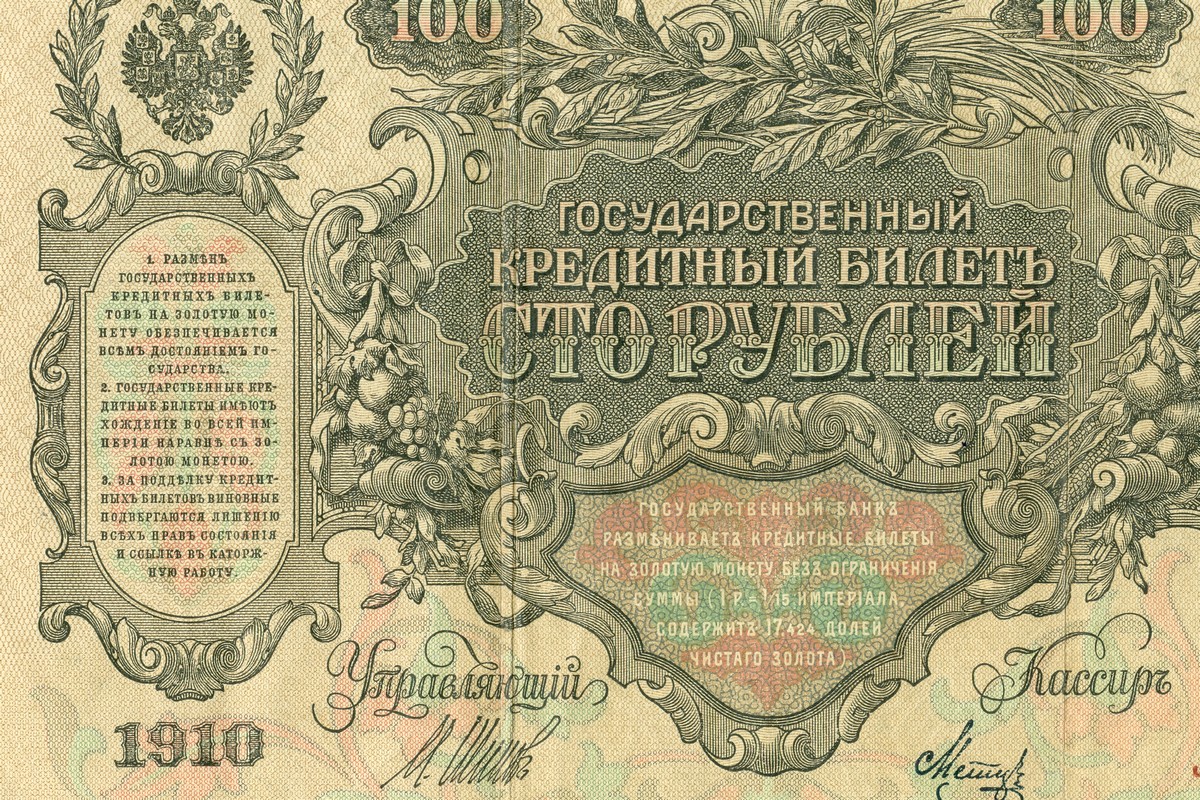
Obverse: Two-thirds of the note’s surface is occupied by an image featuring a dark, ornate cartouche in the center containing the name and denomination: “Gosudarstvennyy kreditnyy biliet. Sto roubles.” Above the cartouche, the number “100” is displayed within circular elements on both the left and right. To the left, the State Emblem of the Russian Empire is set within a laurel wreath, with the year of issue framed below. On the right, the monogram of Nicholas II appears under the imperial crown, followed by the numerical denomination and the serial number in red: LF 187538. The bottom features the facsimile signatures of the State Bank’s manager and cashier.
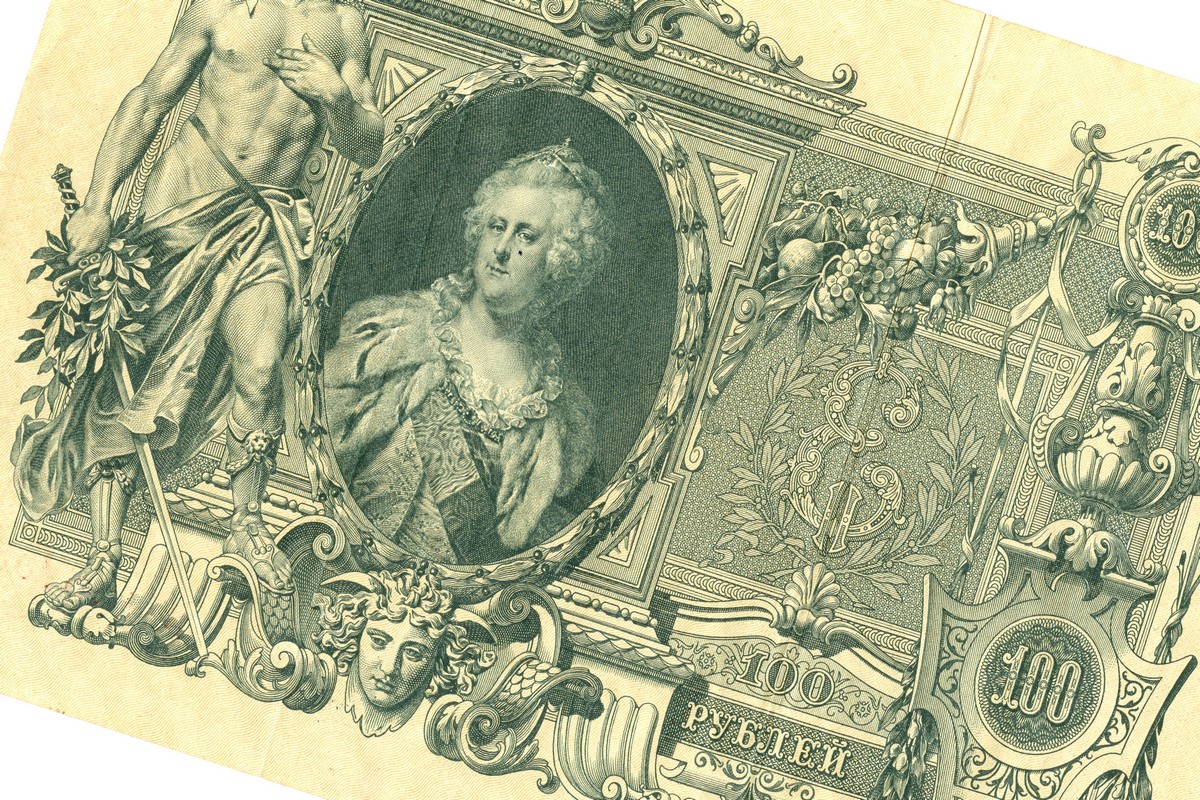
Reverse: Two-thirds of the area features an allegorical composition in a classical style. On the left is a nude, classical male figure holding a sword and a laurel branch. The center features an oval portrait of Catherine II wearing a crown, and a decorative mask positioned below. The right edge contains a vertical ornamental block with the denomination “100 rubles” framed by floral decorations. A blue handwritten inscription is located in the upper right corner.