


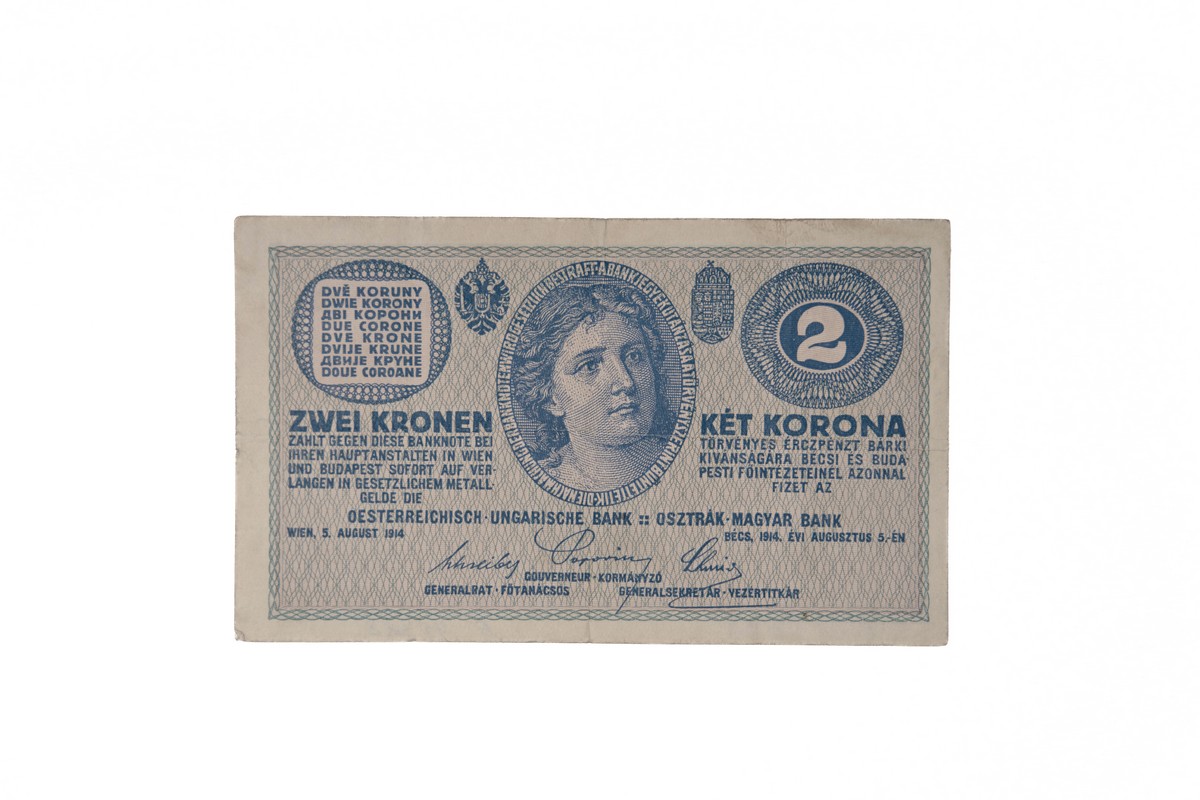
The Сrown was the monetary unit of Austria-Hungary from 1892 to 1918. It also circulated in Ukrainian territories that were part of the empire. Following the formation of the Western Ukrainian People’s Republic on former Austrian lands, the crown served as a temporary currency alongside the hryvnia. The first banknote issued by Austria-Hungary in wartime (1914) had a denomination of 2 crowns. It was hastily created to replace silver coins, with a simplified design, errors in the Hungarian text, and the use of low-quality paper. crowns. After two modifications it was replaced in 1917 by a new version.
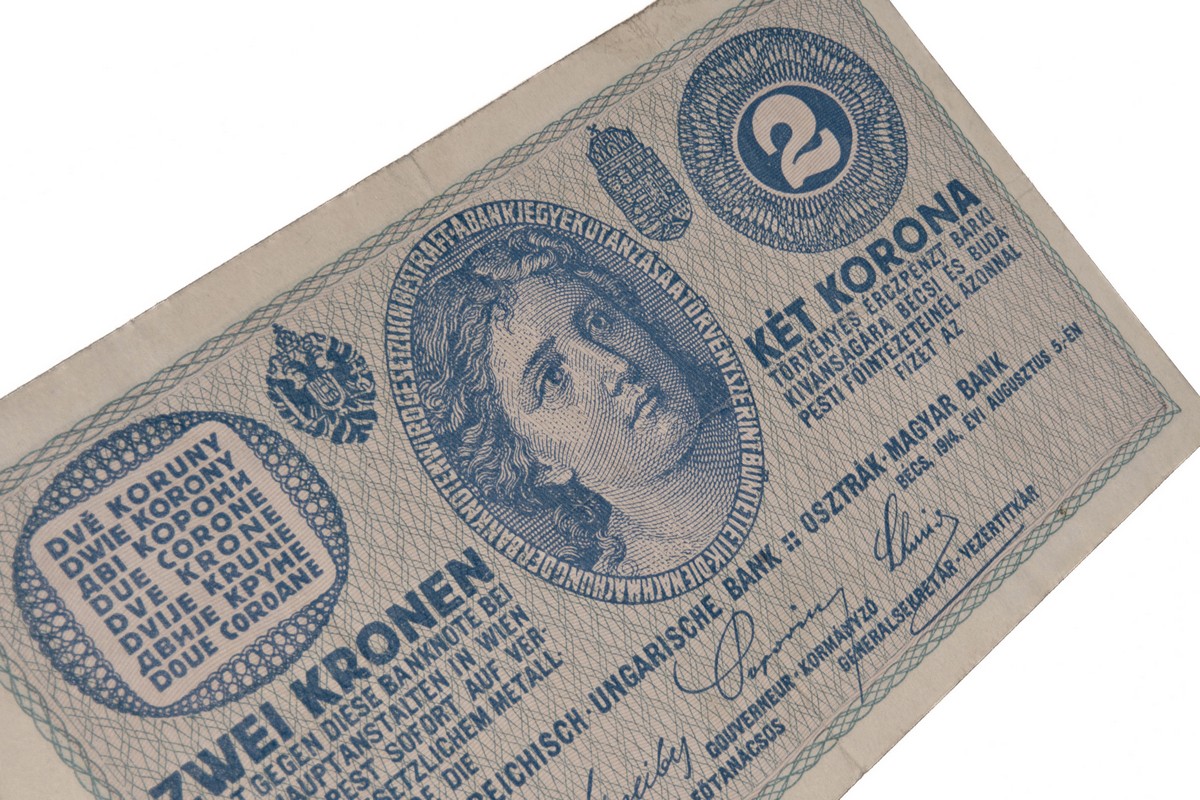
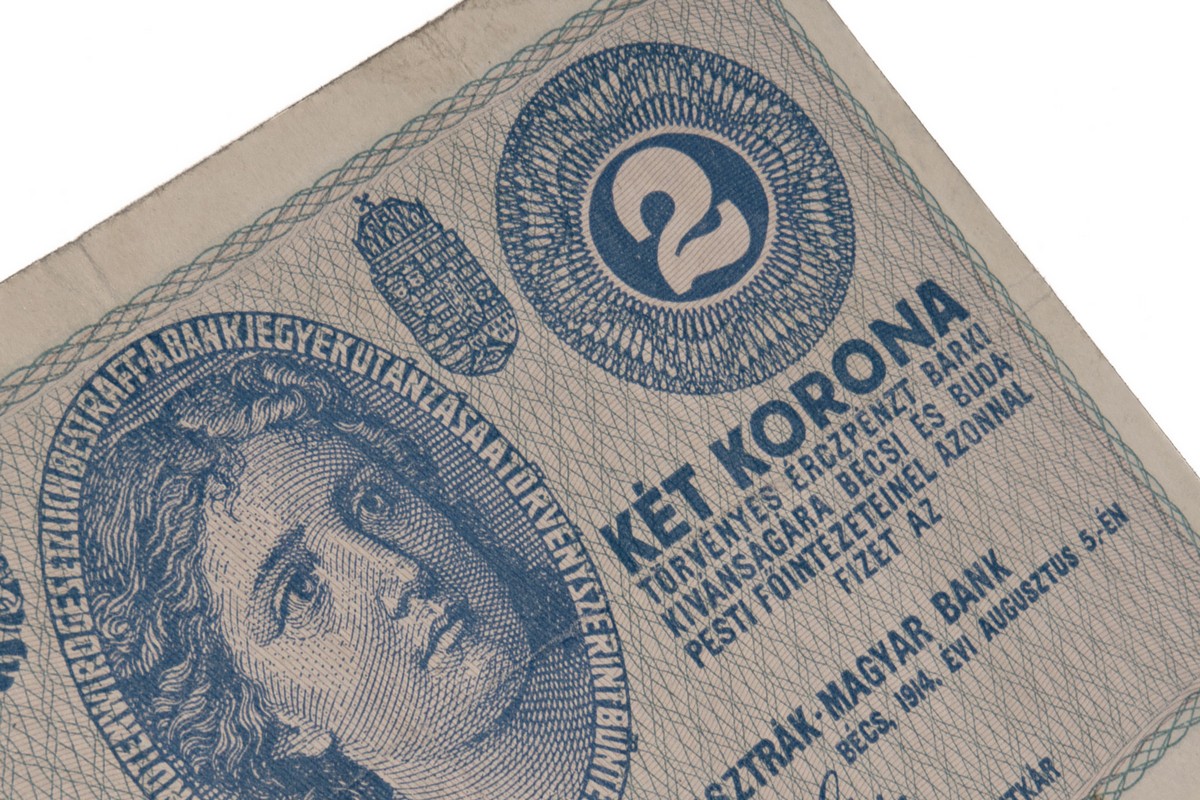
Obverse: In a stylized rectangular frame of geometric ornament in the center there is a portrait image of a woman in an oval frame. To the left of the portrait is the small coat of arms of Austria and to the right there is the small coat of arms of Hungary. Further left, the denomination is inscribed in a circle in eight languages (Czech, Polish, Ukrainian, Italian, Slovak, Croatian, Serbian, Romanian). Below the portrait, the bank’s name is listed along with the denomination in German ("ZWEI KRONEN") and the date August 5, 1914. To the right, the denomination appears in numerals within a circle. At the bottom, the denomination in Hungarian ("KÉT KORONA"), the bank’s name, and the issue date are displayed. The signatures of the bank’s manager and secretary are located in the center.
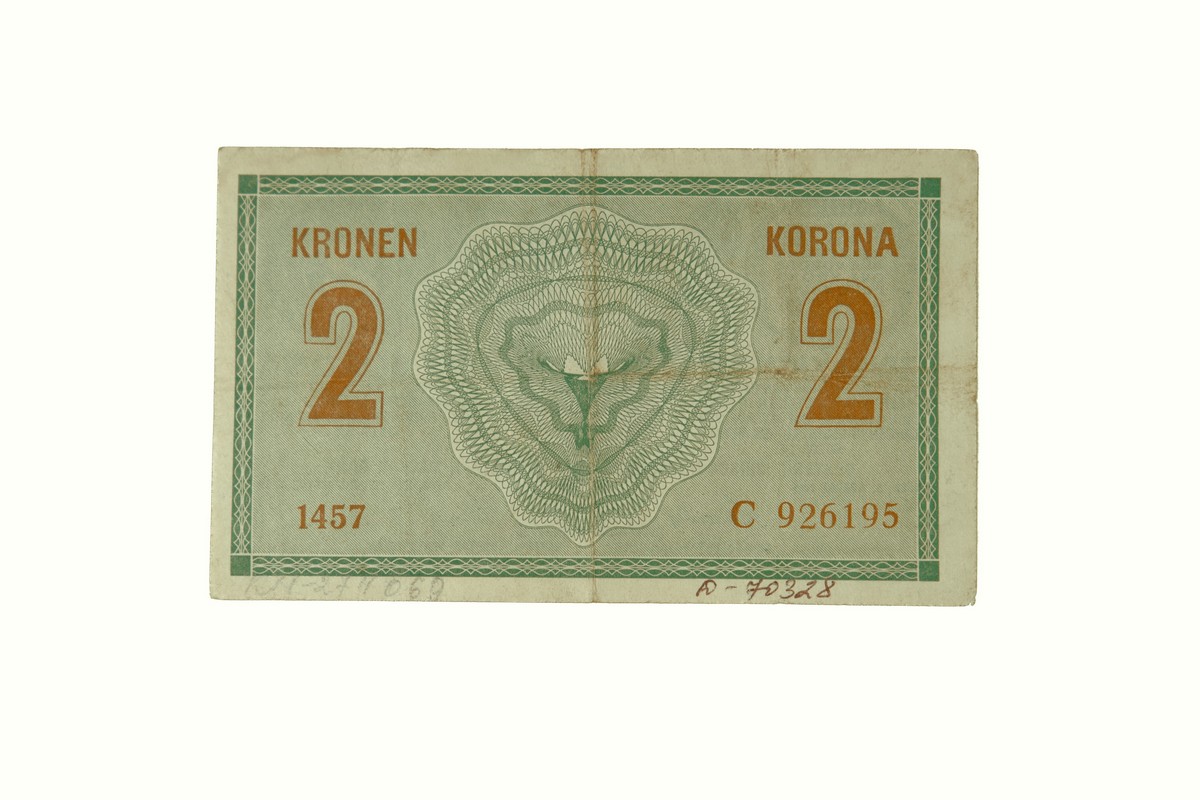
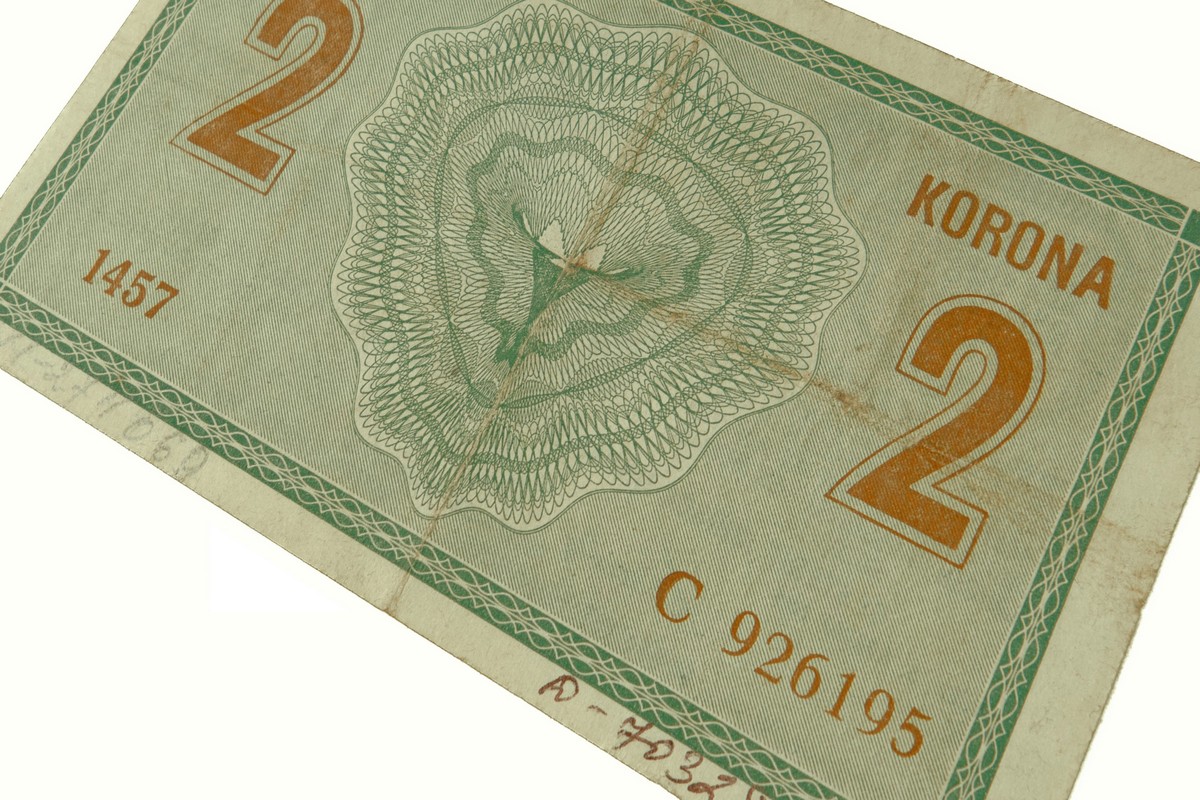
Reverse: In a stylized rectangular frame in the center there is an image of a geometric figure of irregular shape with wavy edges. The sides feature the denomination in both German and Hungarian: "2 KRONEN" and "2 KORONA". The banknote’s series and number, 1457 С 926195, are printed at the bottom.