


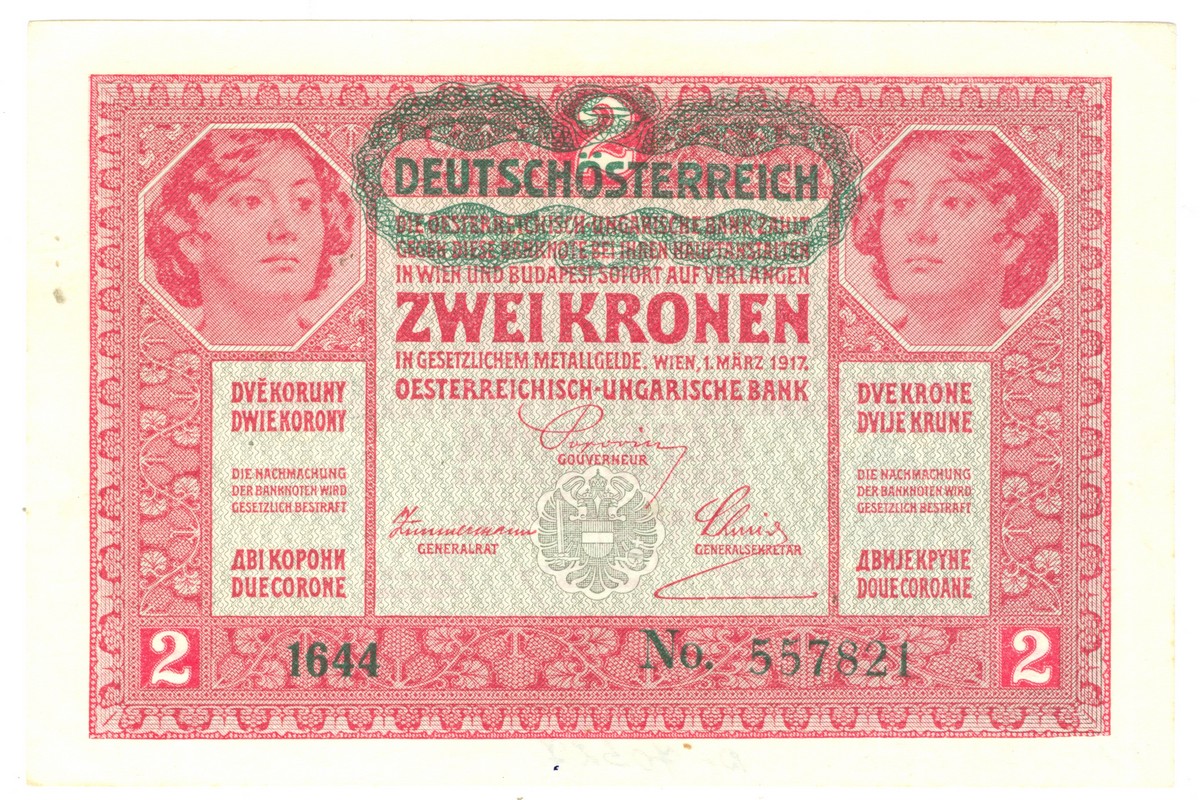
After World War I, the Austrian state adopted the name "German Austria" (Deutschösterreich). This name was officially used from November 12, 1918, to October 21, 1919. During this period, the country oversaw the exchange of banknotes for stamped versions. The stamping of Austro-Hungarian krone was officially completed on March 25, 1919. Both the stamps and overprints on these banknotes featured the word "DEUTSCHÖSTERREICH" (literally "GERMAN AUSTRIA"). By September 1, 1920, all unstamped banknotes lost their status as legal tender in Austria.
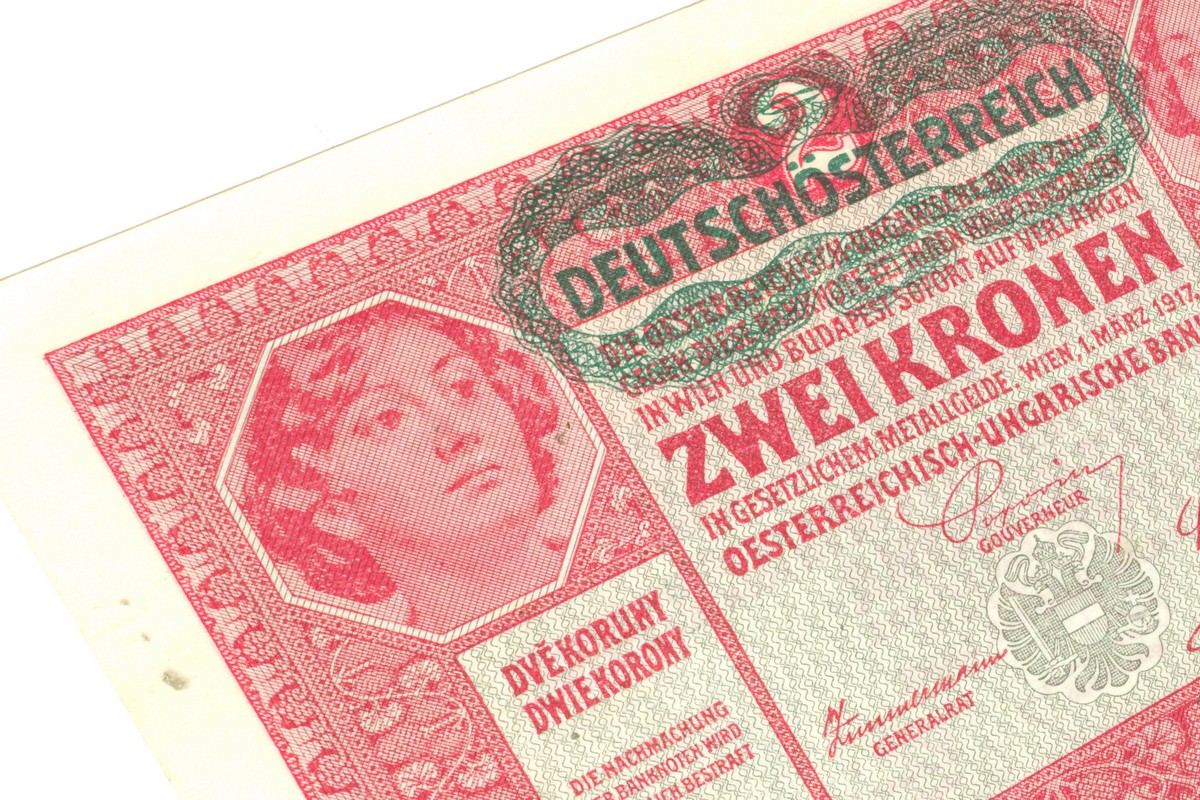
Obverse (Austrian side): Within a stylized rectangular frame featuring floral and geometric ornamentation, the center displays the denomination in German: "ZWEI KRONEN" (two crown) and the issue date of March 1, 1917. The upper section shows the denomination in numerals, while the lower section contains the signatures of the manager and bank secretary alongside the small coat of arms of Austria. Octagonal frames in the upper left and right corners feature a woman’s portrait. Within rectangular frames, the denomination is inscribed in eight languages (Czech, Polish, Ukrainian, Italian, Slovak, Croatian, Serbian, Romanian). The banknote’s series and number are 1644 No. 557821. The green "DEUTSCHÖSTERREICH" overprint is enclosed in a stylized 56 x 20 mm guilloche frame.
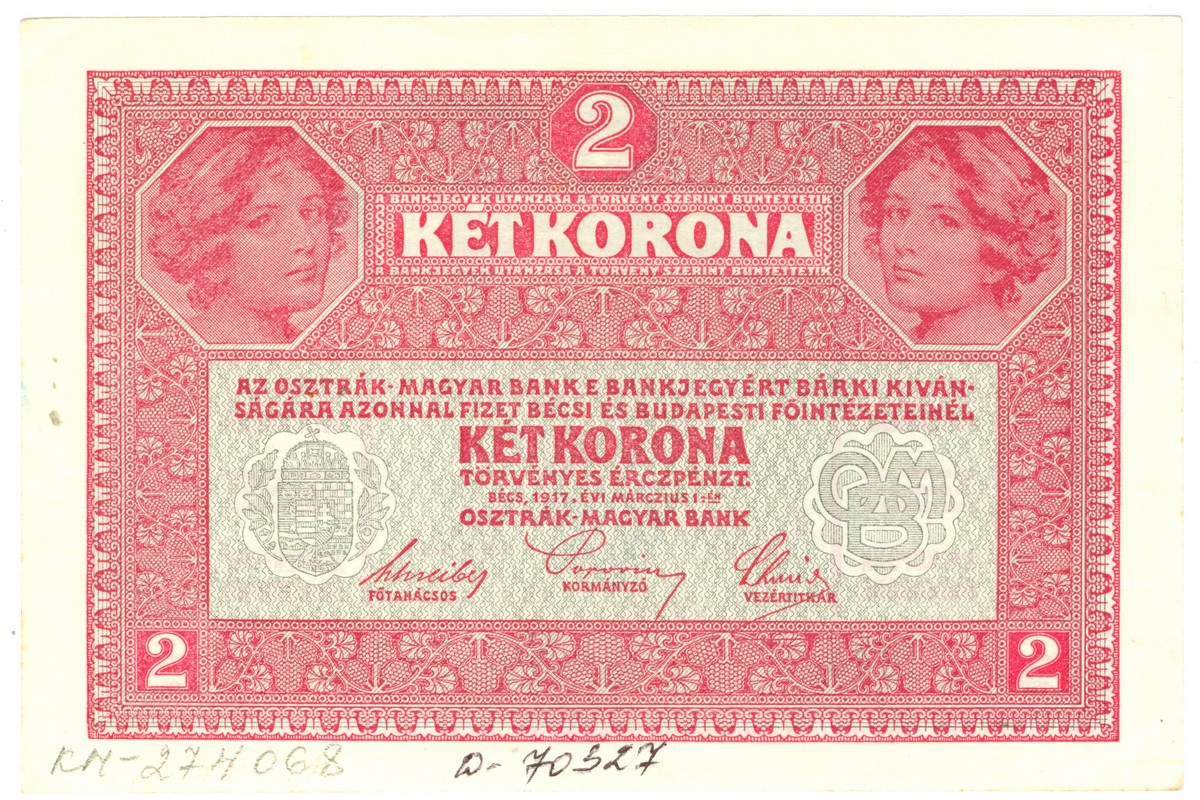
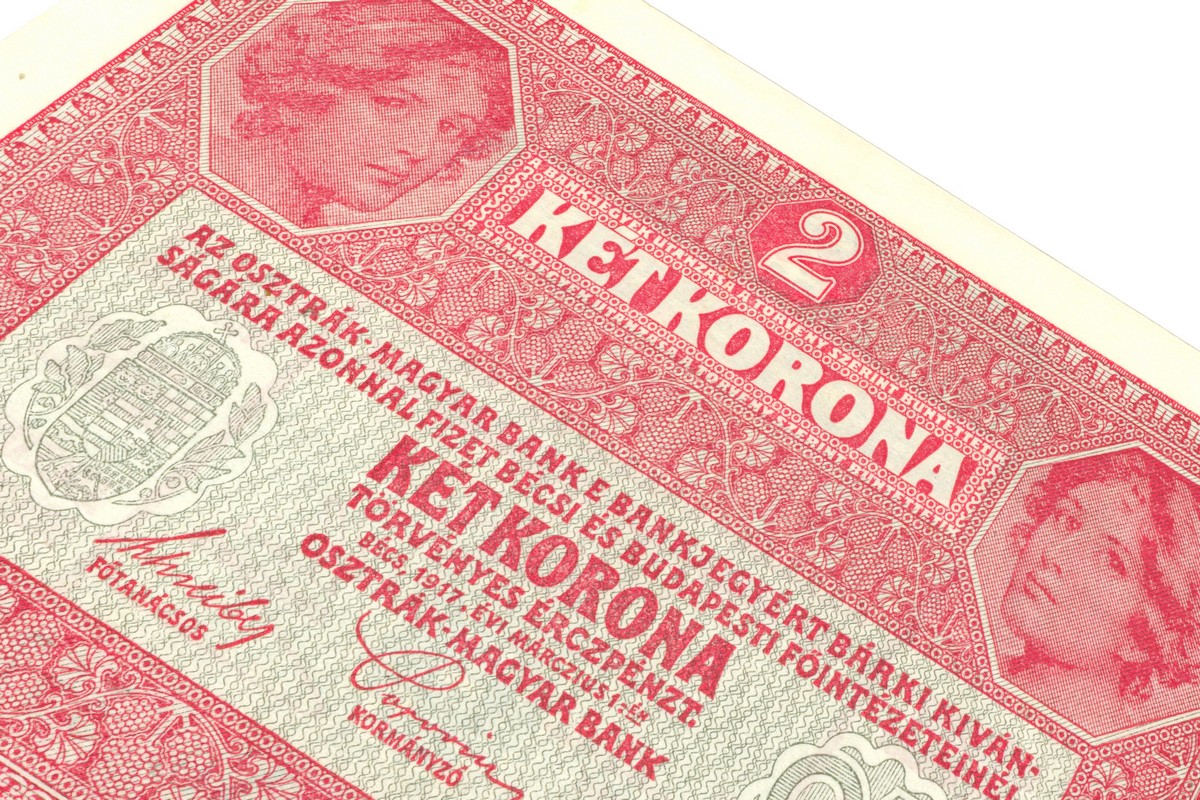
Reverse (Hungarian side): A stylized rectangular frame with floral and geometric ornaments centers the Hungarian denomination "KÉT KORONA" and the March 1, 1917, issue date. The denomination appears in numerals at the top, while the signatures of the bank manager and secretary along with the small coat of arms of Hungary appear at the bottom. The upper corners feature the same portrait of a woman in half-profile within octagonal frames. All inscriptions on this side are in Hungarian.