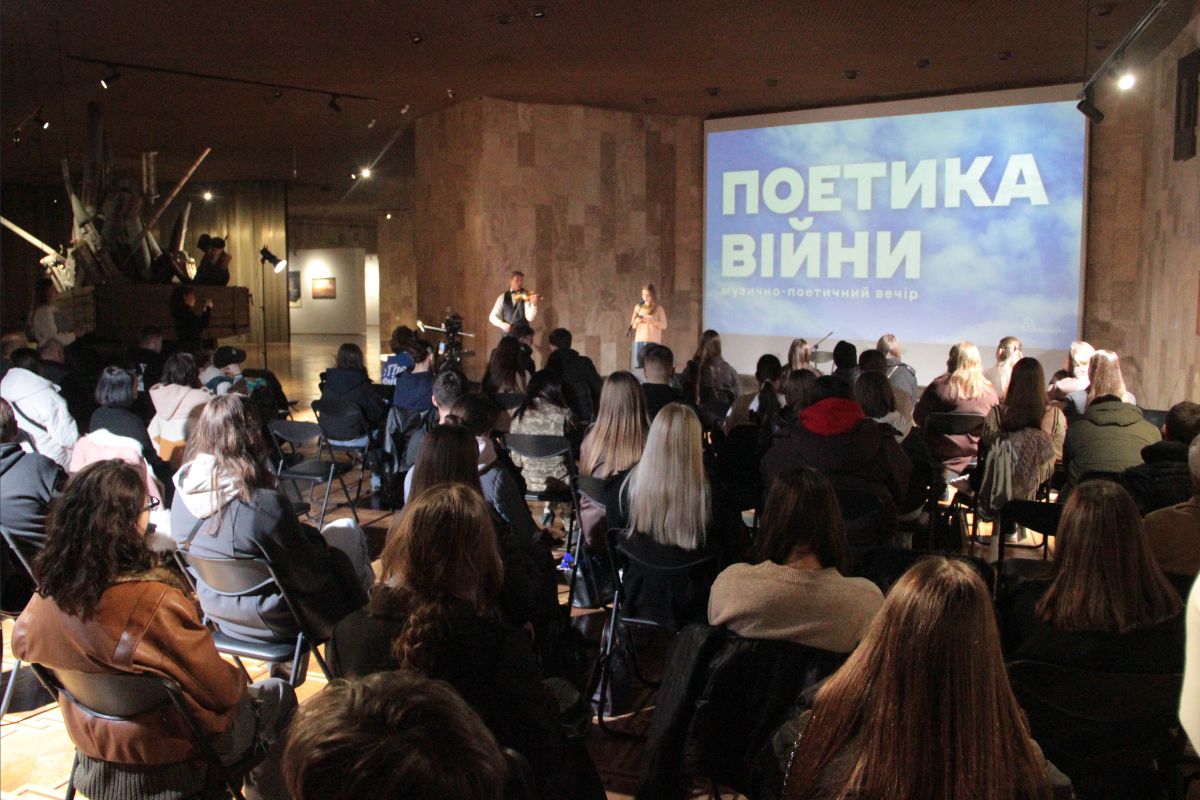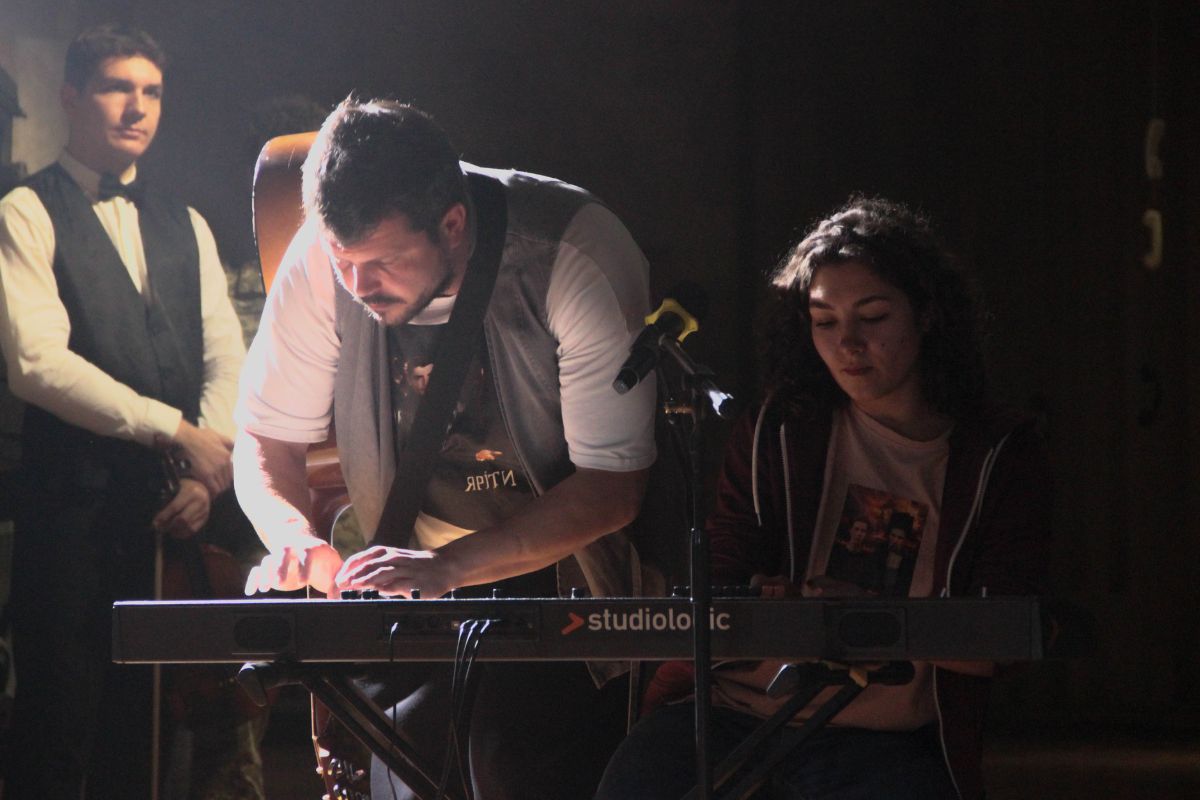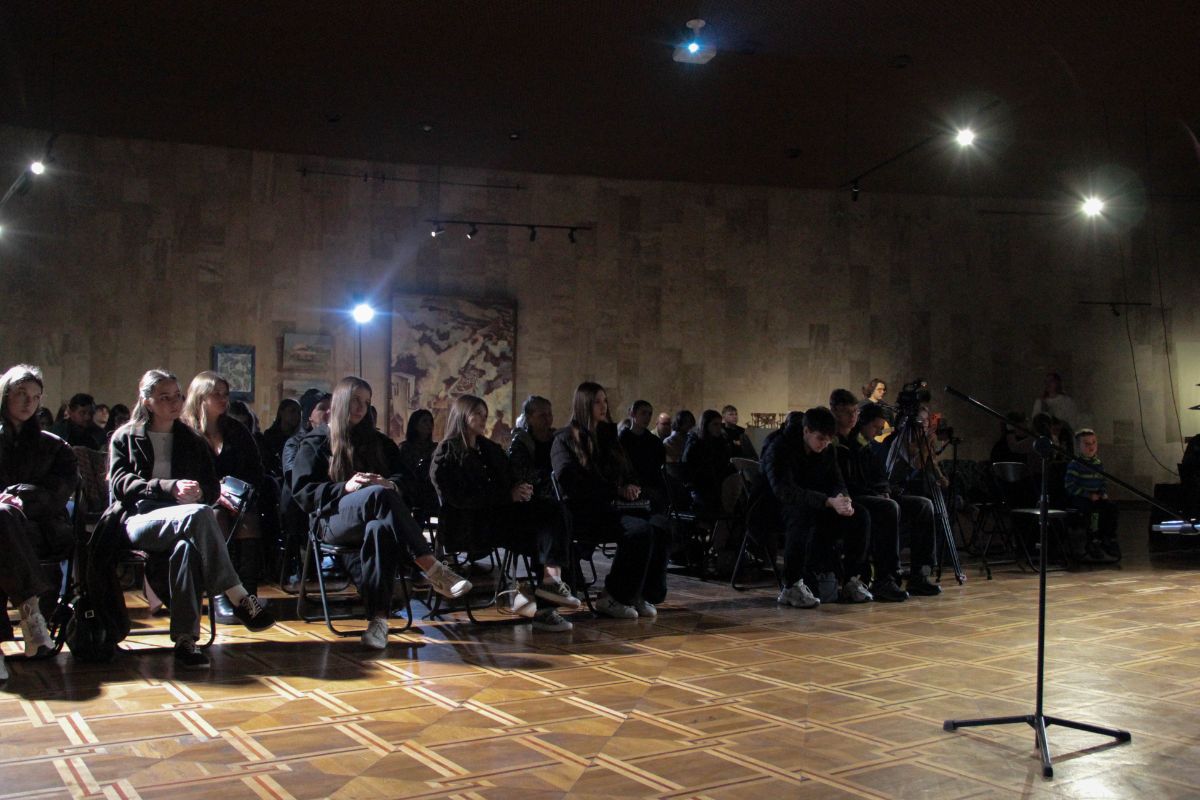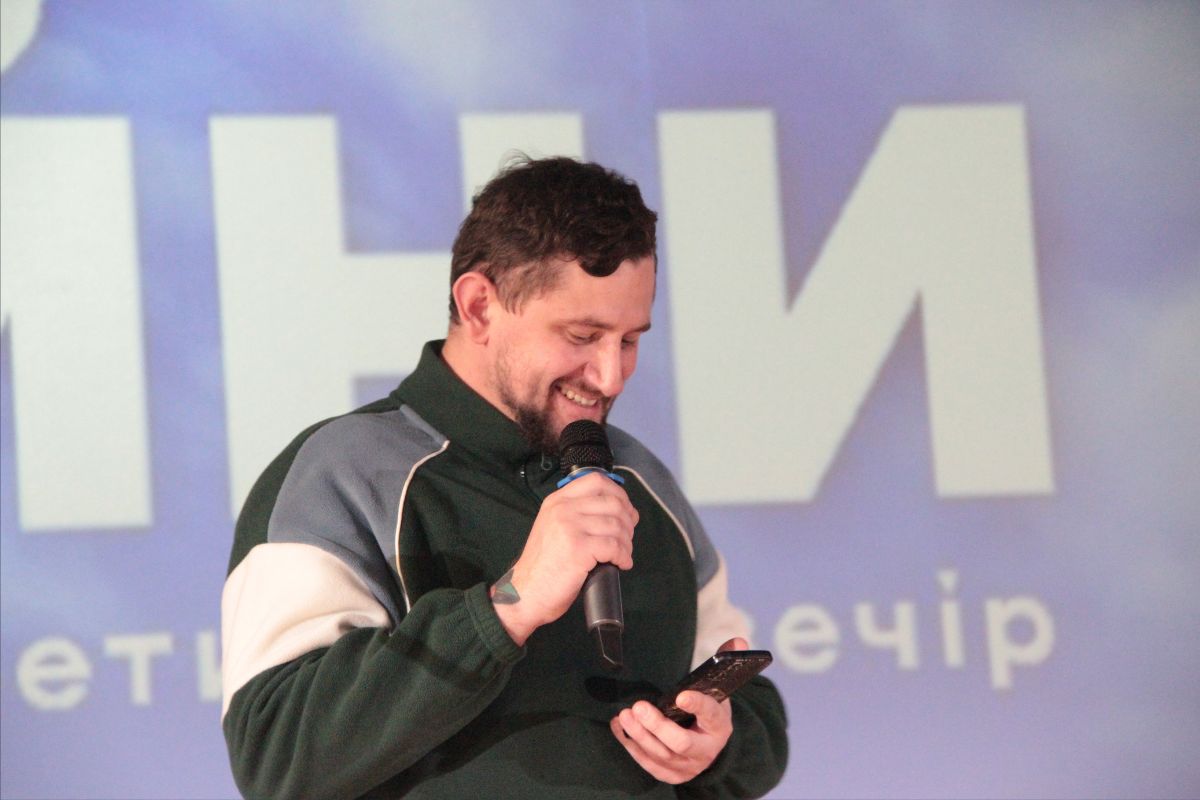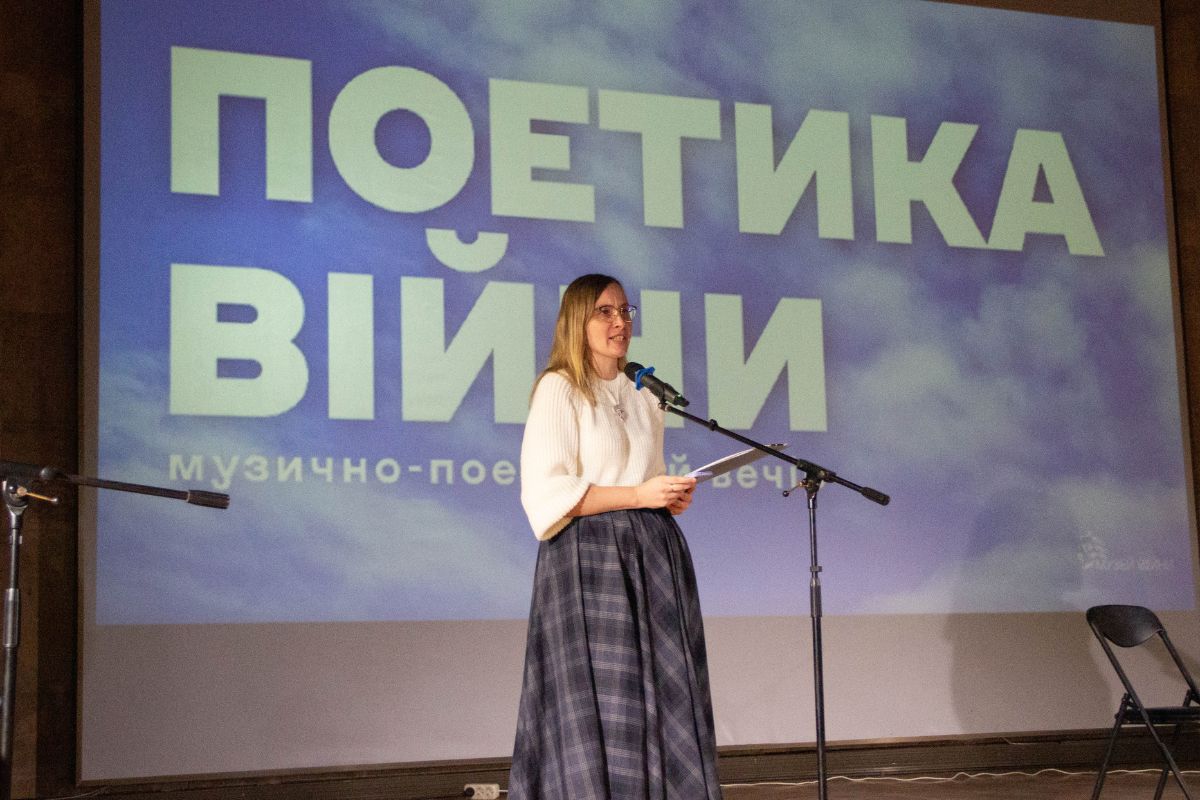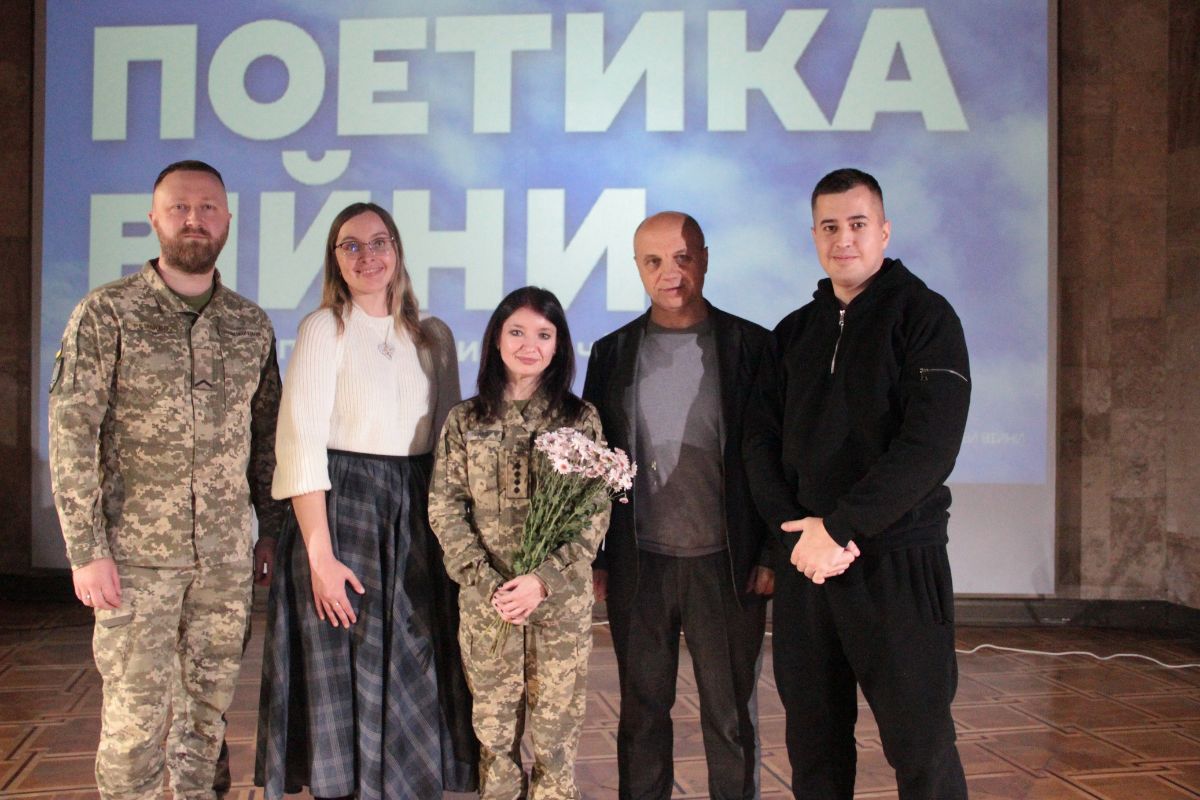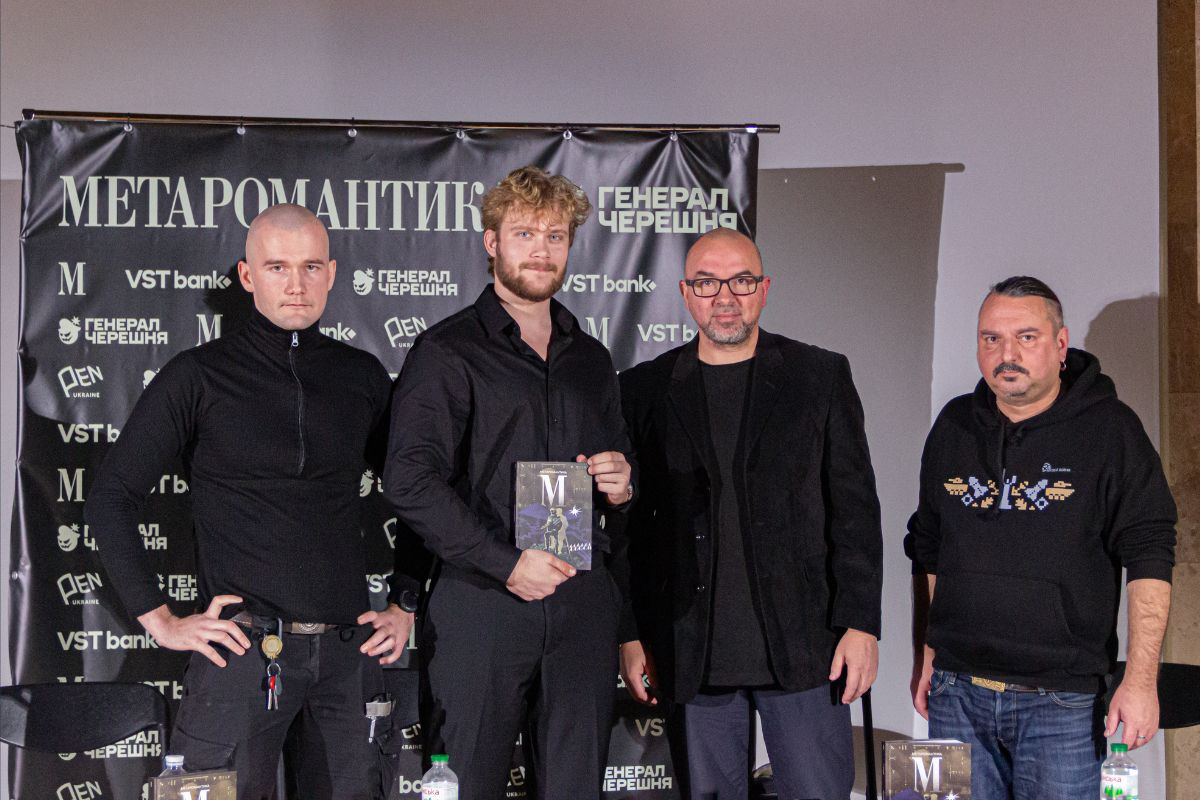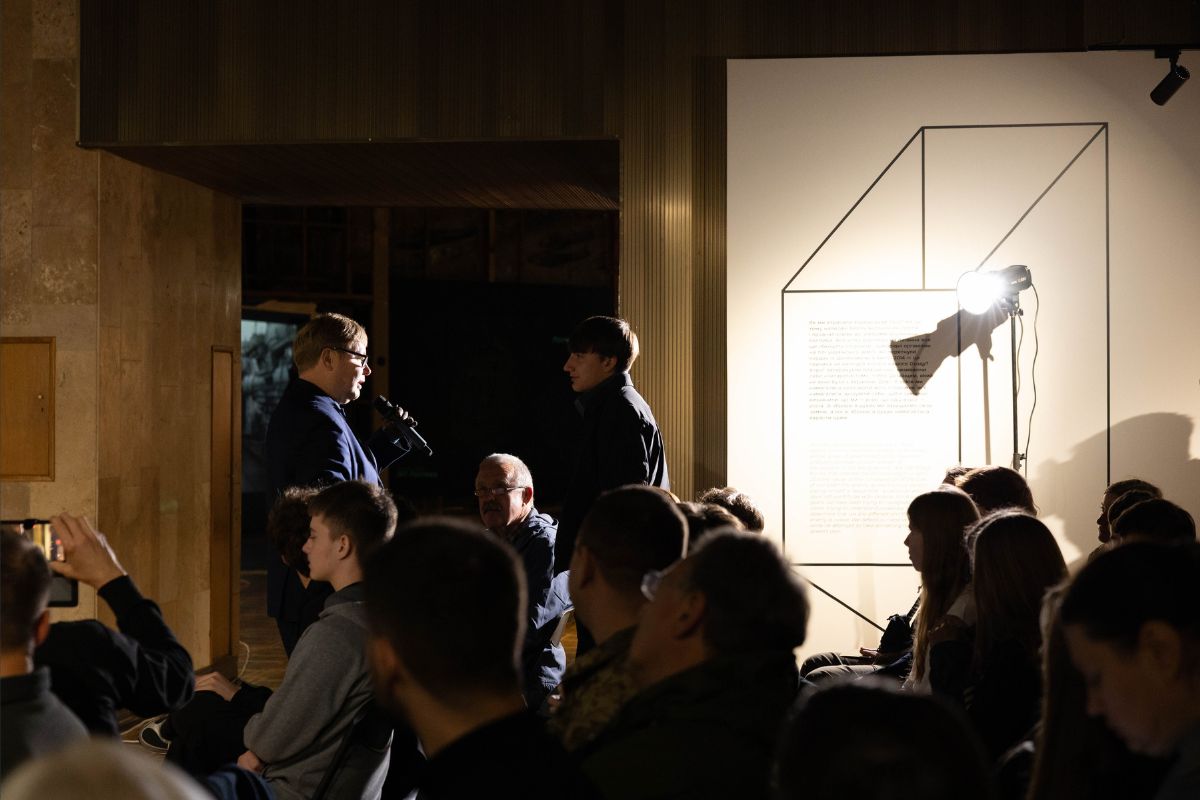


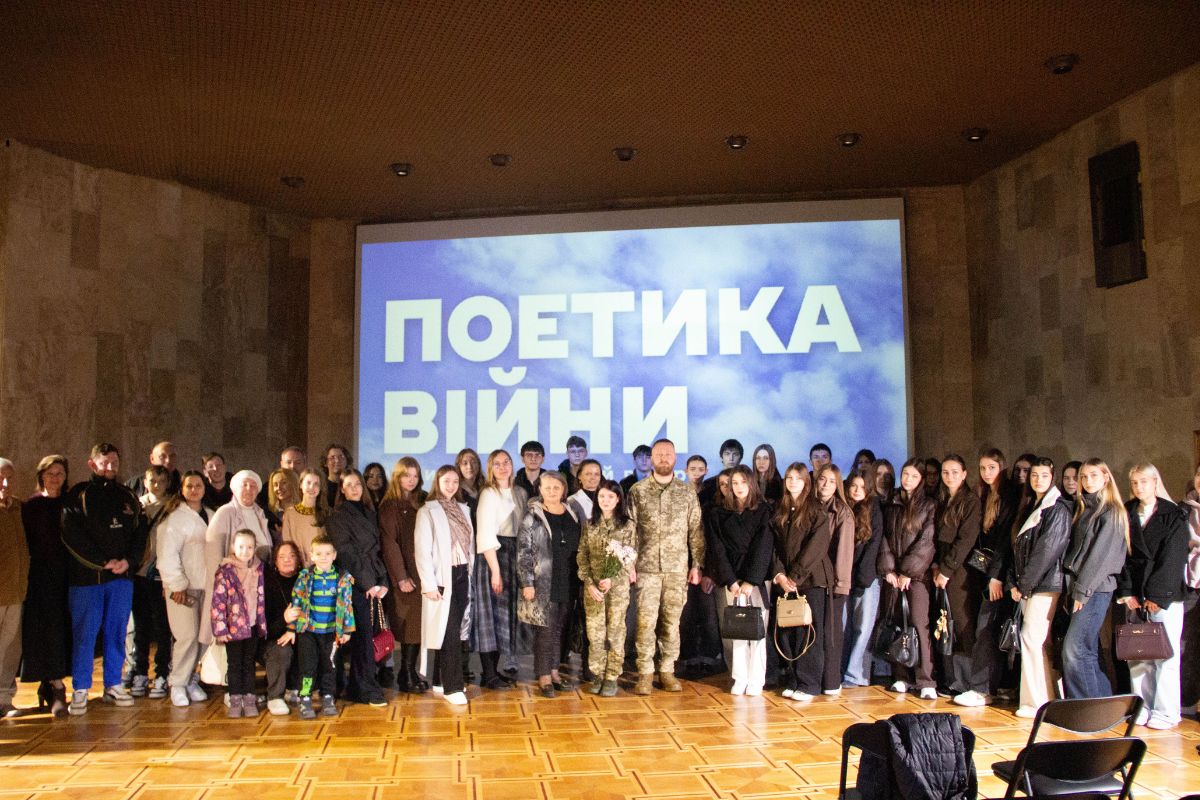
The War Museum hosted Poetics of War for the second time, marking the Week of Ukrainian Literature and Language. Poems by artists serving in the military and poets writing about the war were recited on stage.
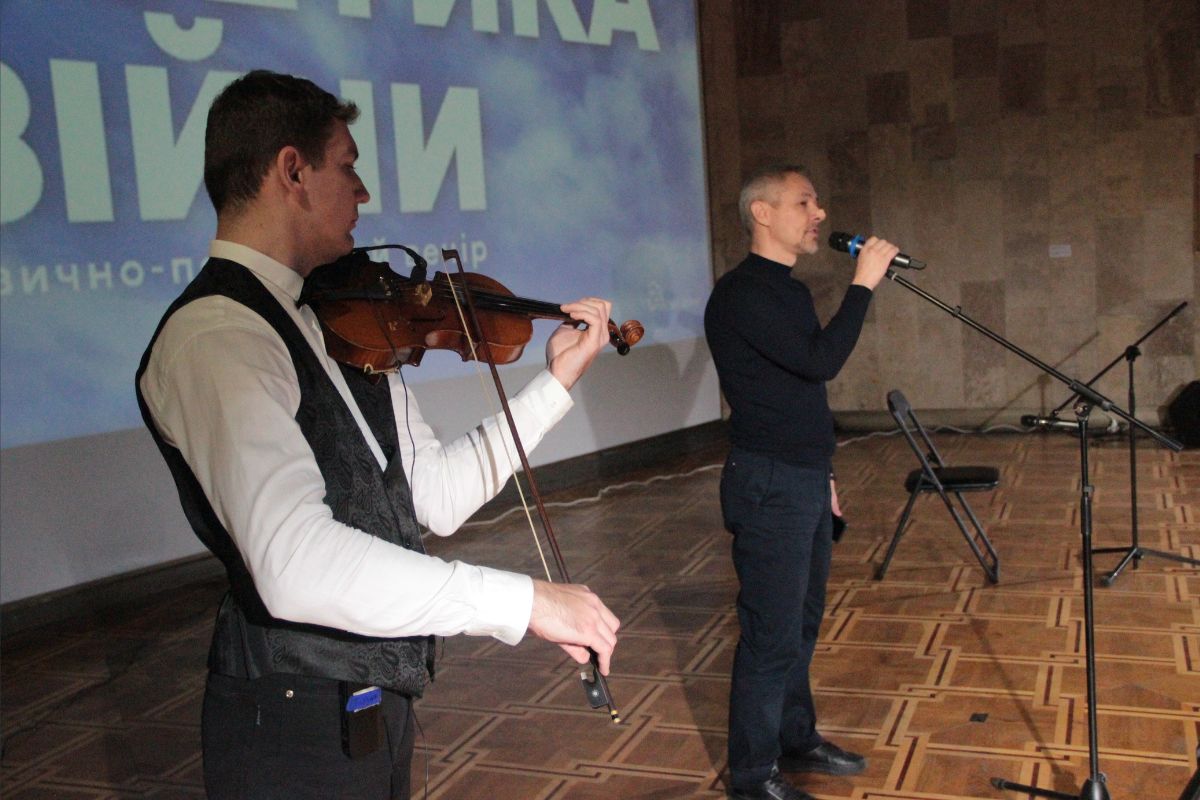
Senior Soldier Bohdan Burbyha, a musician with the National Exemplary Band of the Armed Forces of Ukraine, added a special atmosphere to the evening by accompanying the poetry readings on his violin.
The first to take the stage was Svitlana Krysenko, a journalist, screenwriter, artist and organiser of poetry gatherings. She admitted that the war had taken far too many people from her, but had brought poetry back into her life. ‘Now is the time for our poetry, our music, every form of creativity and self-expression. All of these testify to the power of art to convey and reveal what is happening in the times we are living through’. Her poems speak of ordinary people sheltering in metro stations during attacks, homes without electricity, and the everyday strategies for survival that every Ukrainian now knows by heart.
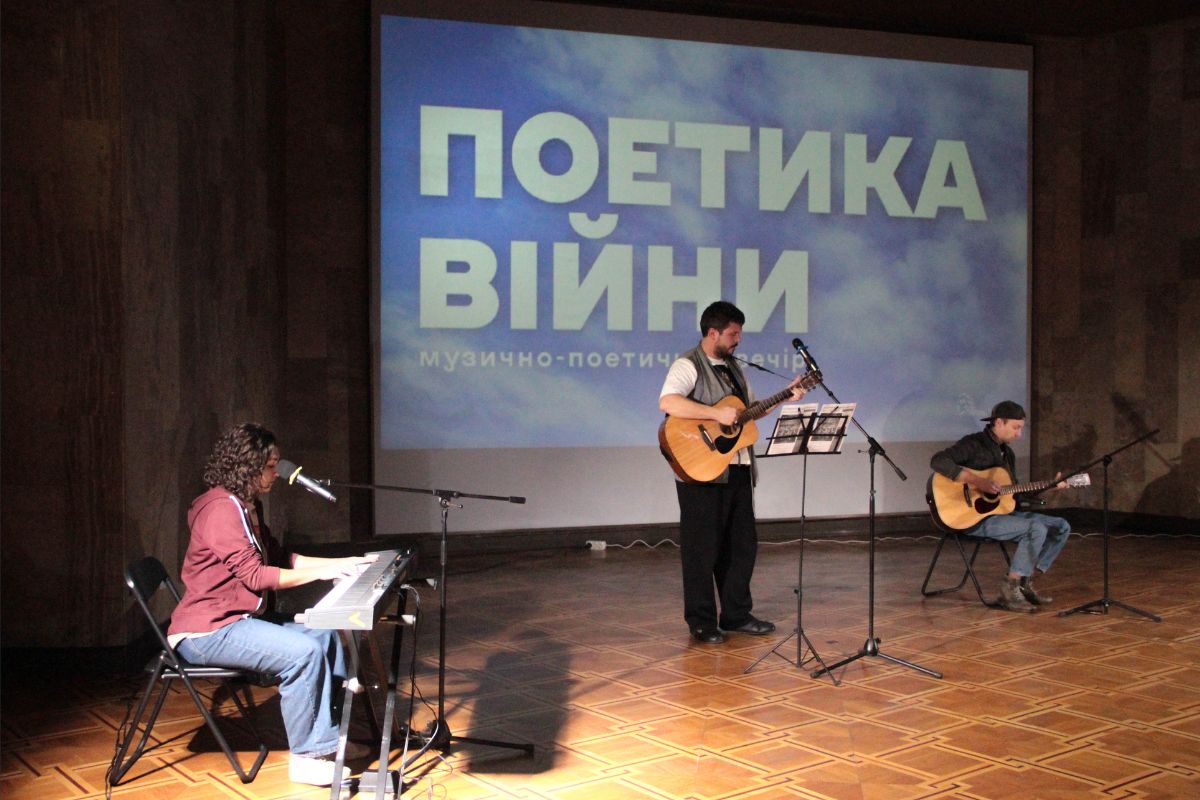
The trio Fable Poem Prose from the Theatre Between Three Columns told fables about prominent Ukrainians and performed musical settings of their poetry. Taras Shevchenko’s ‘I Was Thirteen’, Volodymyr Sosiura’s ‘So Very Gentle, So Very Anxious’ and Vasyl Stus’s ‘How Good It Is That I Am Not Afraid of Death…’ were given fresh interpretations, inviting the audience to rediscover works they thought they knew by heart.
Olena Herasymiuk, a writer, volunteer paramedic with the Hospitallers and founder of the Unwritten project, spoke of a city before the war, anxious anticipation, the first strikes and a promise to return. Her lines about resilience rang out with conviction: ‘Look, miracles happen only through struggle; the stubborn wing of a kestrel defies the forces of nature.’ Another of her poems was dedicated to the memory of all those killed or missing, both military personnel and civilians.
Roman Krasiuk, a serviceman, poet, veteran of Ukraine’s War of Independence and volunteer, read poems about pain and the traumatic experiences of combat. He had signed his military contract before the full-scale invasion and served in the 13th Separate Air Assault Battalion. On 24 February 2022, he was stationed near Horlivka. After sustaining a serious injury, he became a volunteer. His poetry portrays everyday life on the front line, the tragedy of a mother who has lost her son, and philosophical reflections permeated by pain.
Vadym Baklanov, a professional musician and graduate of the R. Glier Kyiv Municipal Academy of Music, now serving with the 1004th Separate Brigade for Security, Service and Support of the Ukrainian Ground Forces, performed on the guitar two songs familiar to Ukrainians since childhood: ‘What a Moonlit Night’ and ‘A Cossack Rode Beyond the Danube’.
Olesia Oleksiia, a lawyer, employee of the Ministry for Communities and Territories Development of Ukraine, singer, poet, songwriter and mother of two daughters, presented her poetry collection Barefoot Through Myself, written during the full-scale war. Her poems explore a mother’s fears for her children during massive attacks on Kyiv, as well as faith, strength and dreams.
Mstyslav Krupenia, a musician, volunteer, post-bard and drummer of the rock band Hideout, performed his composition ‘24.02.2022’, written in the autumn of 2022. The emotional intensity and meaning of his performance made a strong impression on the audience. He then performed another of his original songs, ‘Little Clouds’.
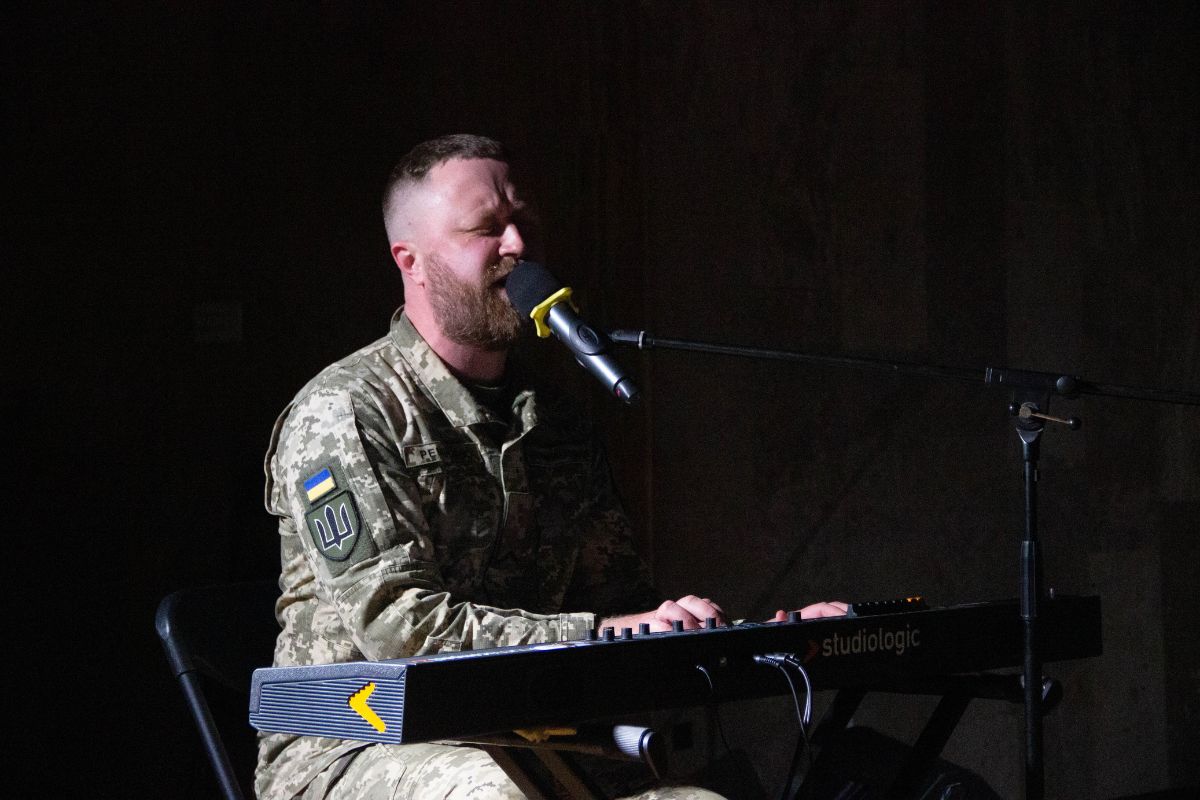
Daniil Kliahin, an opera singer and sergeant with the National Exemplary Band of the Armed Forces of Ukraine, also performed an original composition, ‘I Pray’, written in 2022. The remarkable power of his voice moved everyone in the audience.
Anatolii Shostak is a poet who has taken part in underground poetry slams, battles and the Garden of Deformation project, as well as a serviceman with military experience dating back to 2015. He has served in Luhansk region (the Serebrianskyi Forest), Kharkiv region (Lyptsi and Hlyboke), Kherson region and Donetsk region (Dobropillia and the Pokrovsk sector). He sustained a serious injury near Pokrovsk. During the evening, he read poems about autumn and society’s attitudes towards wounded veterans, a subject particularly painful in light of his own experience.
Civic activist and rapper Staryi Maks performed ‘My Shevchenko’, a composition based on Taras Shevchenko’s poem Taras’s Night. He recalled occasions in the early 2000s when he had been prevented from performing the song because it was considered ‘nationalist’.
A particularly touching and heartfelt performance came from Captain Oksana Stupenko, Senior Officer of the Communications Section of the 101st Separate Brigade for the Protection of the General Staff of the Armed Forces of Ukraine, named after Colonel General Hennadii Vorobiov. She read ‘A Conversation No Child Should Have’, a poem about children in shelters whose parents and grandparents have become ‘stars in the sky’. Her poem ‘A Grain of Faith’ explores harsh realities and the search for faith in oneself.
Oleksandr Lysenko, Doctor of Historical Sciences and Head of the Department of Military History Research at the Institute of History of Ukraine of the National Academy of Sciences of Ukraine, shared profound reflections, warmth and optimism with the audience. Welcoming the cadets and students of the National Academy of Internal Affairs, he described the evening as ‘the best literature lesson’ and ‘a return to the very source of culture’. He recalled how, in 2014, when the Russian-Ukrainian war began, he had opened his first lecture for students with a rap of his own. His poetry is filled with the profound emotions of an eyewitness: ‘Is it not horrifying… that not only adults but also children have come to see war as part of everyday life? This sorrowful harvest… leaves not sheaves but crosses in a field awash with poppies.’
Next to take the stage was Maksym Korovnychenko, a cultural manager of the Kraina Mrii ethno-festival, coordinator of the Andriivskyi Descent initiative and member of the National Writers’ Union of Ukraine, who publishes under the creative name ‘all_writer’. Each of his poems carries its own dedication. ‘Titans’ expresses gratitude to wounded warriors who have endured the horrors of war. The allegorical poem ‘My City Sleeps with Its Eyes Open…’ portrays a fortress city that sees the hyenas approaching and fights back. ‘Christmas’ tells a poetic story of ‘Banderas’ and ‘Mavka’, the birth of a child and hope.
The evening concluded with a performance by Lev Remeniev, a senior soldier and musician with the band of the 101st Separate Brigade for the Protection of the General Staff of the Armed Forces of Ukraine, named after Colonel General Hennadii Vorobiov. Before joining the military, he was a professional singer and a contestant on The Voice of Ukraine (2013). At the beginning of the full-scale war, he volunteered for military service and carried out missions in eastern Ukraine. The song ‘Your Hero’ presents the response of a soldier from the 95th Separate Air Assault Brigade to a letter from his daughter. Tragically, the girl’s father was killed before the letter reached him. The final performance was another of Remeniev’s original songs, ‘Free, Unbreakable Souls’, dedicated to all Ukrainian defenders.
The War Museum thanks everyone who joined us for the evening, especially those who took to the stage. You are shaping contemporary Ukrainian culture here and now. We look forward to welcoming you to the Museum again!