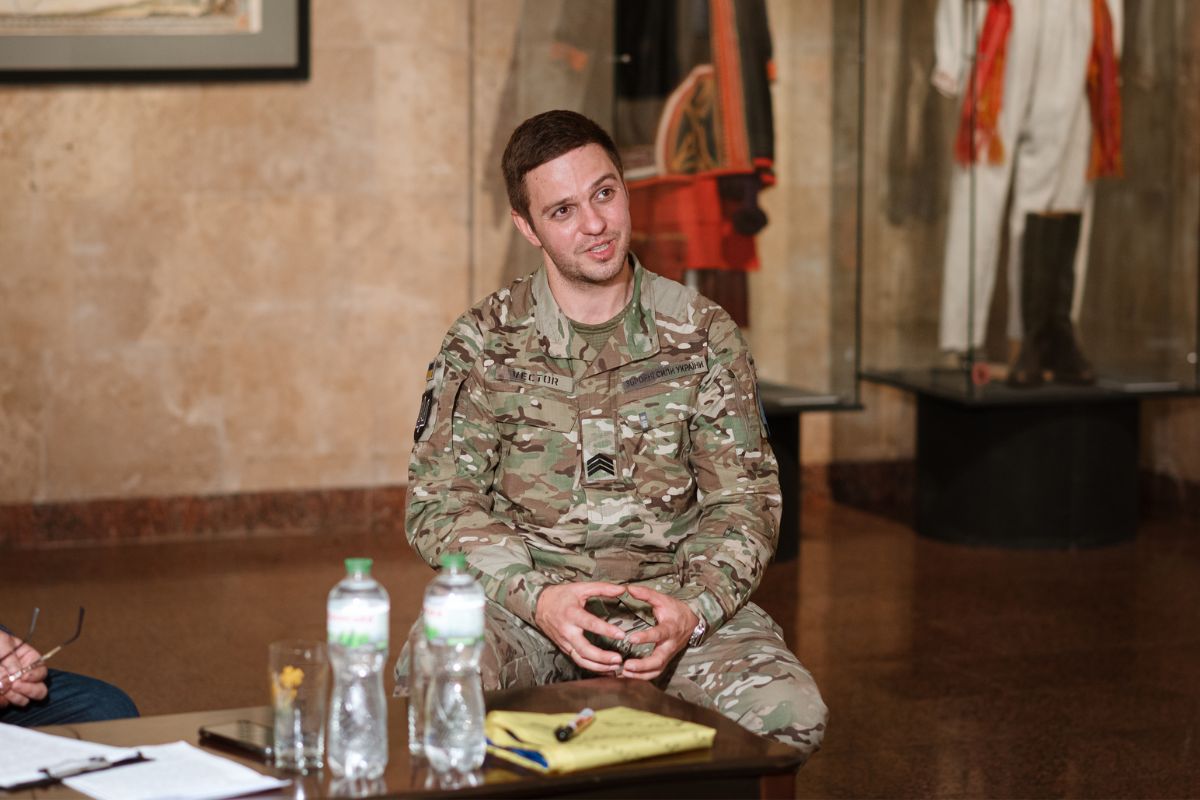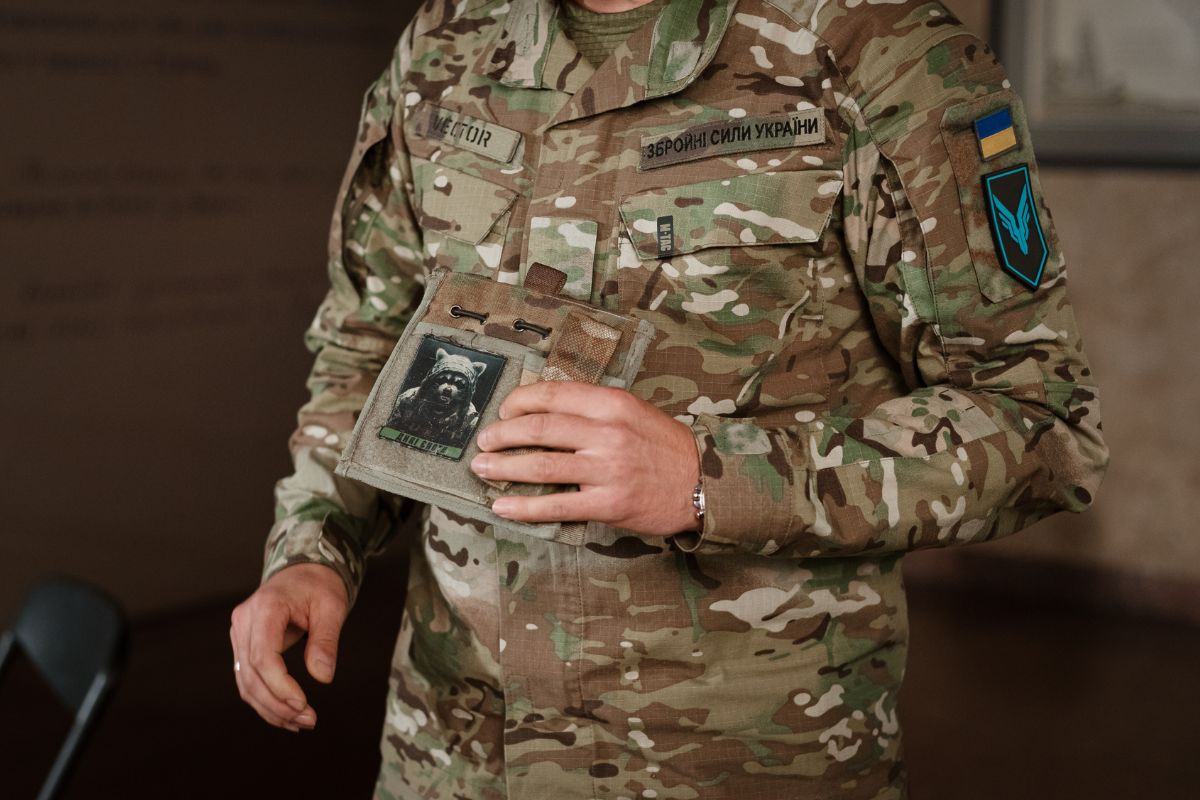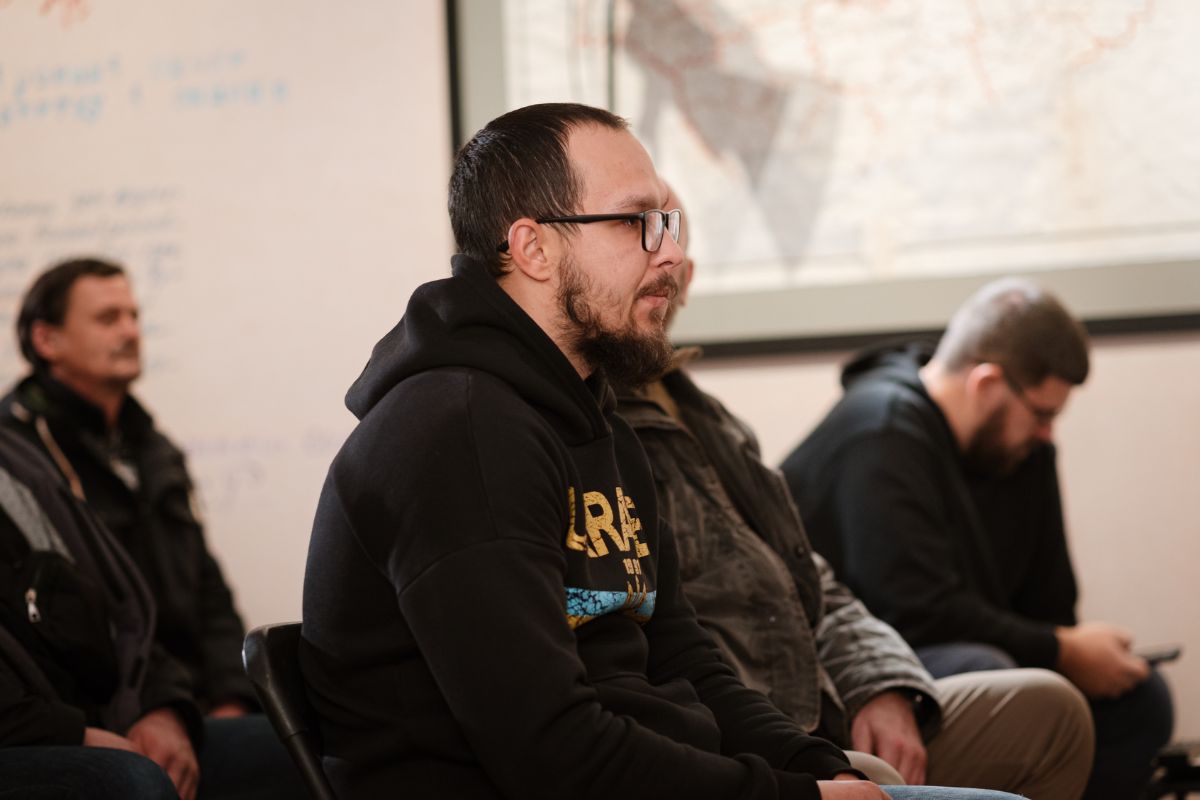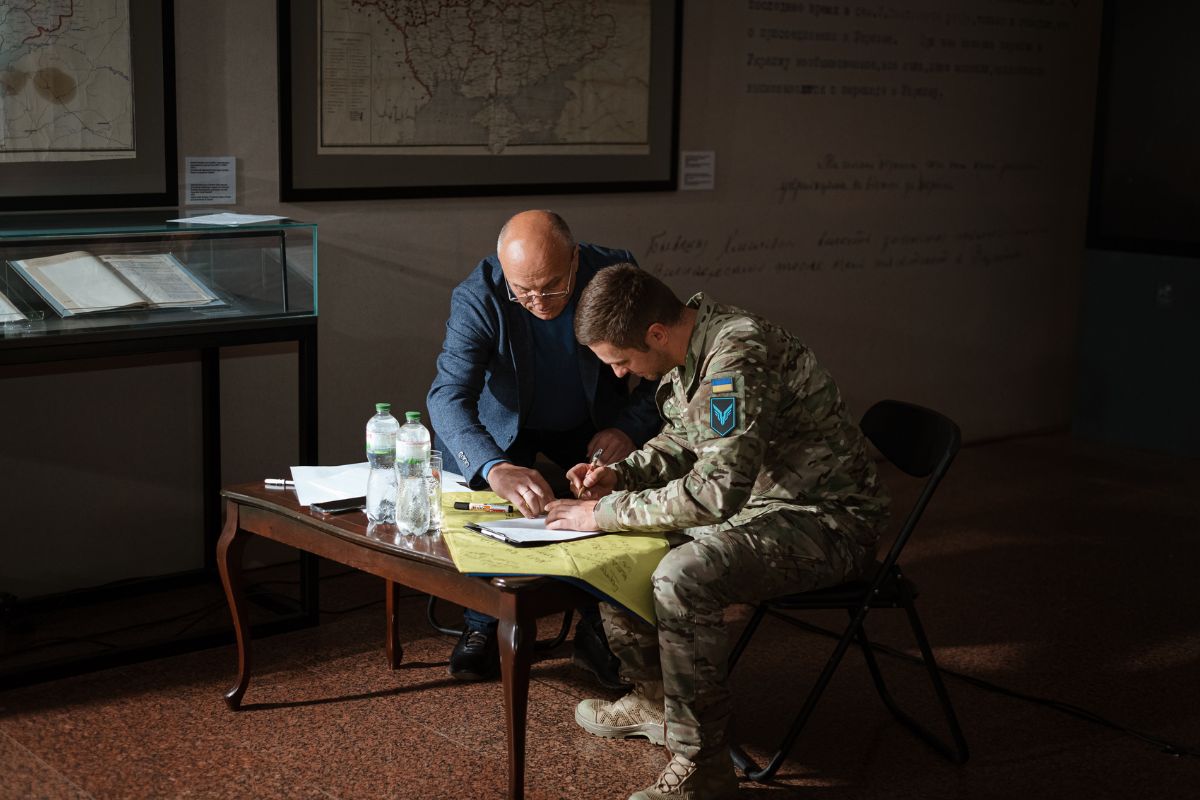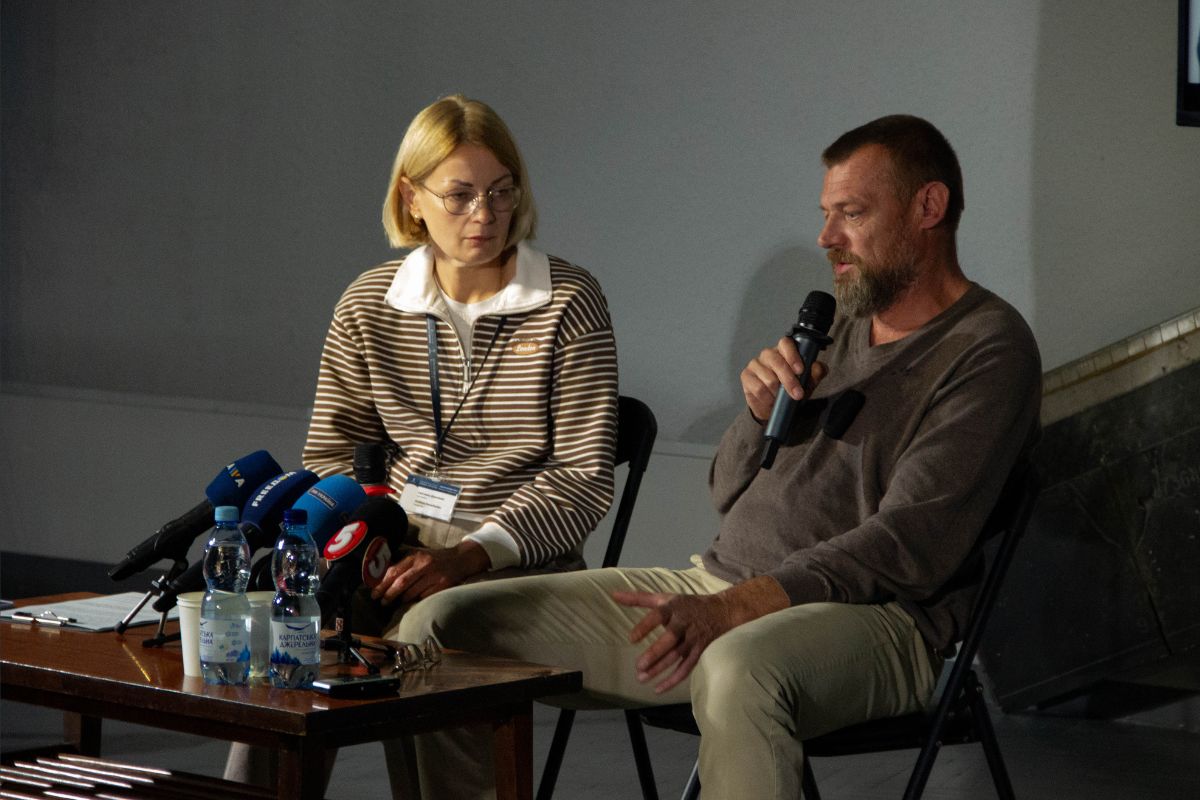


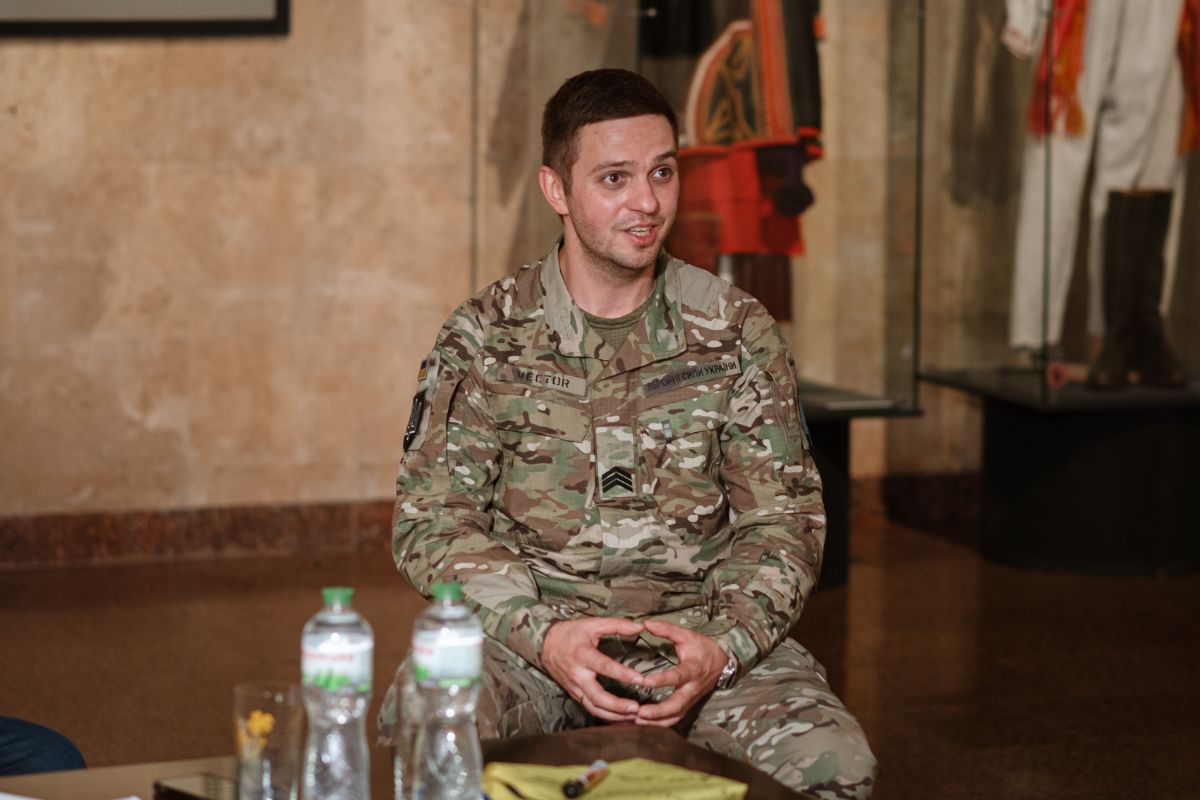
The War Museum continues its series of meetings with military personnel who are currently defending Ukraine. The hero of the new conversation is combat reconnaissance specialist Andrii Zahorodniuk with call sign “Vektor” of the strike unmanned aerial vehicle complexes company of the unmanned systems battalion of the 101st Brigade for the Protection of the General Staff named after Colonel-General Henadii Vorobiov.
In her opening remarks, Chief Custodian of the Museum’s Collections Oksana Yankovenko emphasized: “The story of every person is part of the common struggle. Special thanks to those who, from the very first day of the full-scale invasion, stood up to defend the country”.
Andrii spoke about his childhood and family. He was born in Kyiv, and spent his early childhood years in a village near Kamianets-Podilskyi. His mother was a teacher, his father worked at a cement plant. The boy would come to the capital during holidays to visit his grandfather and grandmother; it was his grandfather who first brought him to the War Museum. “I could spend hours walking through the halls. It never got boring for me,” the serviceman shared his memories. After a many-year break, Andrii visited the Museum again and noted the changes: “I saw an integrated Ukrainian history and present. It added motivation for me”.
Despite attending an aesthetically focused school, Andrii Zahorodniuk decided to become an electronics engineer. He worked at Ukrposhta, in a vocational training center, at a military lyceum, and developed his own business called “Vektor.” This name expressed his life principle, and later “Vektor” became his call sign. He got married, and the couple had two sons.
On February 24, 2022, his family’s life changed dramatically. Thanks to advance preparation, the family managed to leave Kyiv for Novodnistrovsk. “My wife supported me. Already on March 1, I was standing at a checkpoint with a rifle”, Andrii recounted. After service in territorial defense, there were medical courses, combat missions in Kharkiv region, and then the Bakhmut direction, where the defender began working as a UAV operator.
In 2024, Andrii completed courses in aerial reconnaissance and mastered the operation of thermal imaging and strike drones. As part of the unit, he carried out complex missions in Donetsk region, particularly in the areas of Klishchiivka, Bila Hora, and Chasiv Yar.
He spoke about frontline routine with restraint: “There are no friends in war. There are brothers-in-arms. That’s more than friendship. Brothers-in-arms are those ready to lay down their lives for you.”
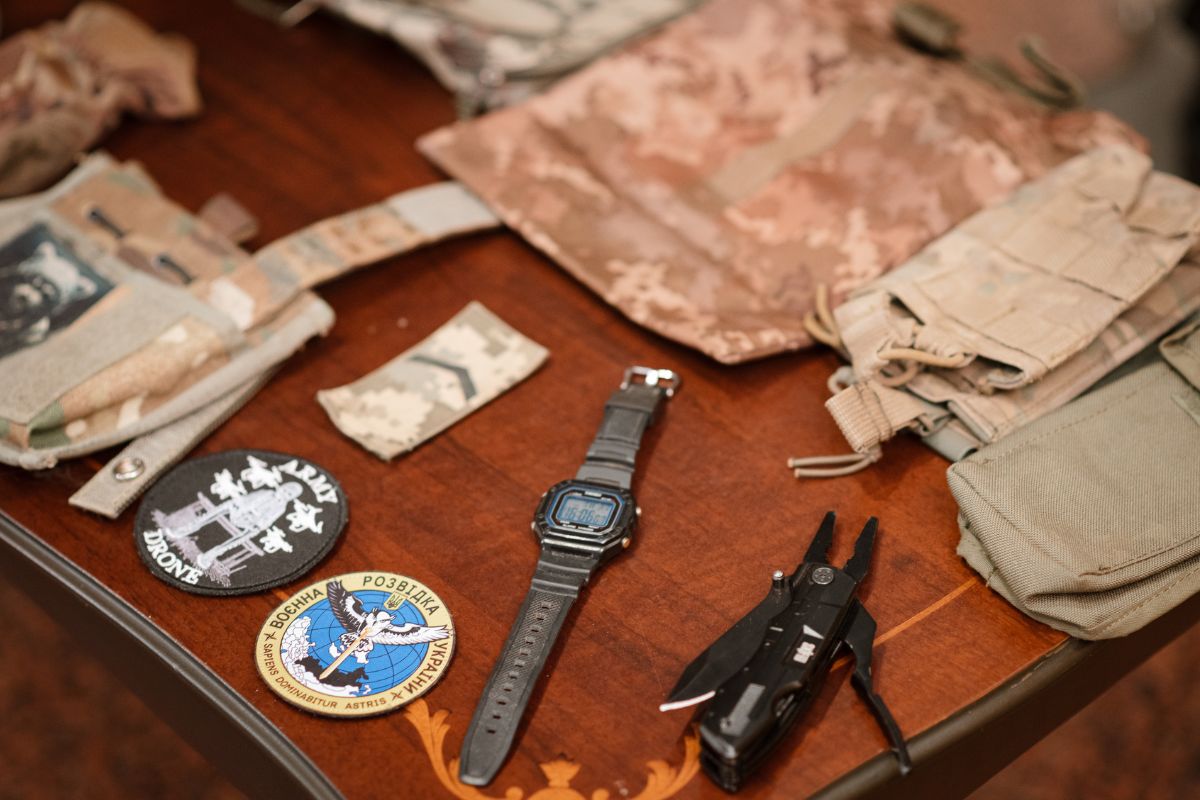
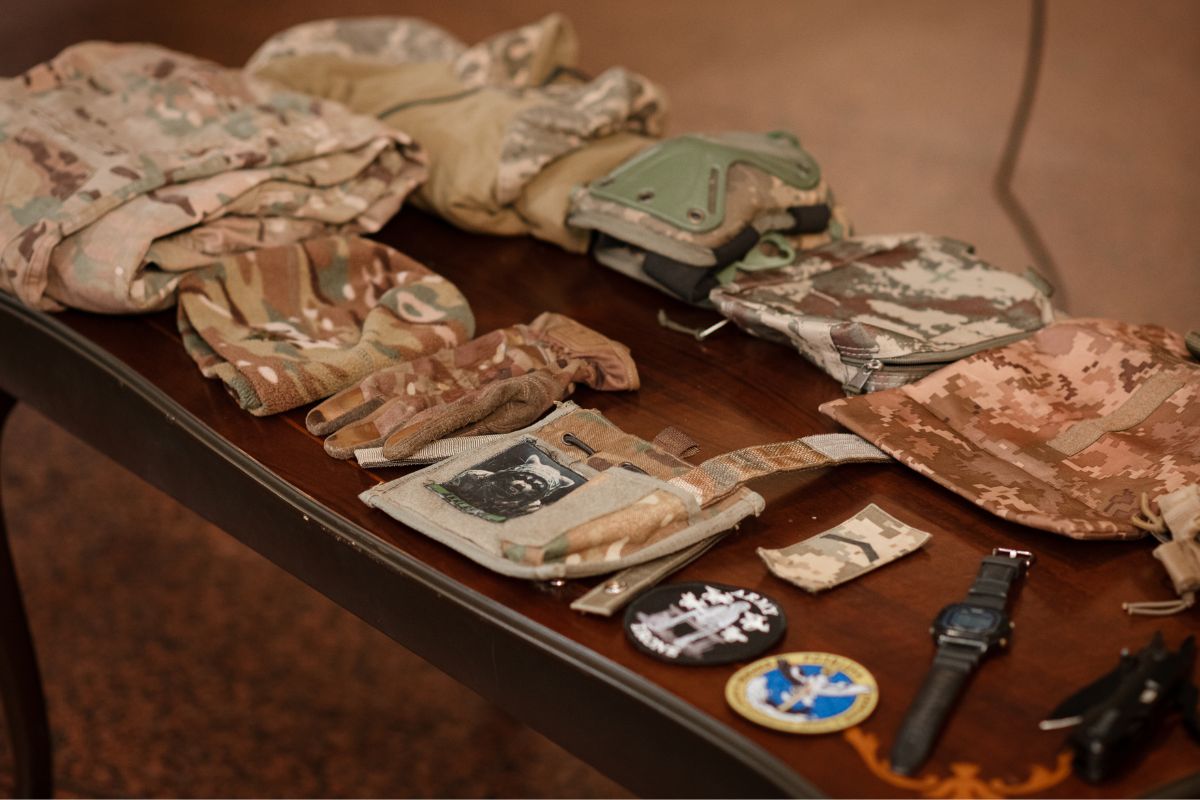
Andrii Zahorodniuk transferred to the Museum’s collection items that had been with him from the first days of service: the hat he wore in 2022, trousers, knee pads, a first-aid kit, a “Scythian” knife, and the shoulder insignia of a senior soldier. “This is memory. This is the history of our work and losses”, he noted.
Andrii has been awarded the Commander-in-Chief of the Armed Forces of Ukraine distinction “For Conscientious Service” and the medal “For Service to the State”. But his greatest support is his wife and two sons, who are currently abroad.
He concluded simply: “The more people think not about themselves but about those around them, the better the world will be. Fight – and you will overcome”.
For the Museum, this meeting served as a reminder that modern history is being created by the hands of those who are defending the country today. And indeed, the direction can only be one – forward.